Many people assume that the risk of dengue ends when the monsoon rains slow down. However, dengue cases can continue to rise after the monsoon.
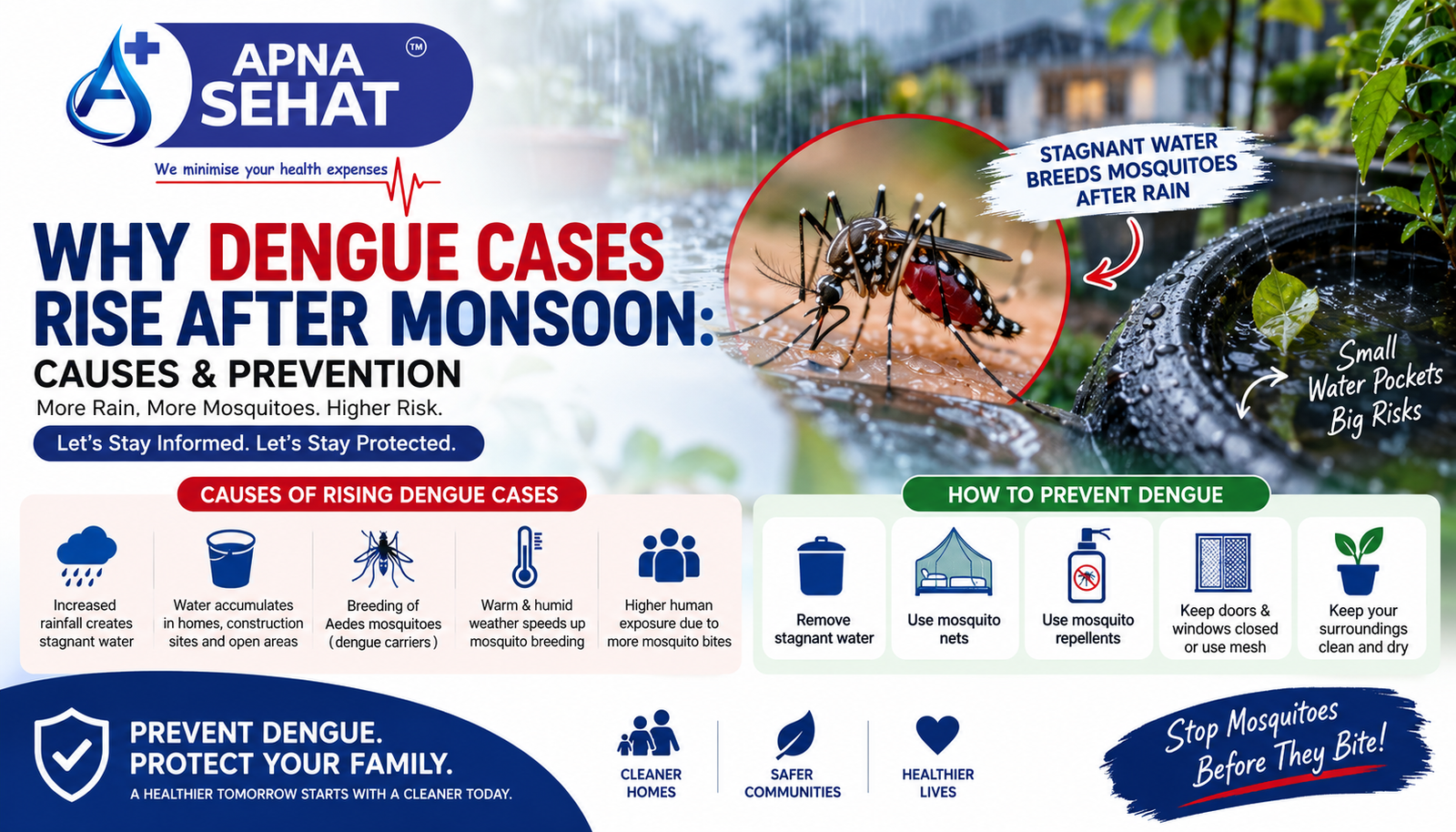
This happens because mosquitoes can find ideal breeding conditions in the days and weeks after heavy rainfall. Small amounts of stagnant water can collect around homes, offices, construction sites and public areas.
At the same time, people may become less cautious about mosquito prevention.
So, why does dengue remain a concern after the monsoon? Let’s understand the reasons, early symptoms and simple prevention steps.
Why Do Dengue Cases Rise After Monsoon?
The main reason is mosquito breeding.
Dengue spreads through infected Aedes mosquitoes. These mosquitoes can breed in small collections of stagnant water.
During the monsoon, rainwater can collect in:
-
Flower pots
-
Buckets
-
Coolers
-
Discarded containers
-
Tyres
-
Construction materials
-
Open water tanks
-
Rooftop areas
-
Drains and other water-holding spaces
After the rain stops, some of this water can remain for several days.
As a result, mosquitoes continue to find places to breed. Warm and humid conditions can also support mosquito activity.
Why Is Post-Monsoon Dengue Risk Important in India?
India experiences a long monsoon season across many regions. After rainfall, water can remain trapped in places that people may not notice immediately.
For example, a small container behind a building or water collected in a plant tray can become a mosquito breeding site.
Furthermore, people often reduce mosquito-control efforts once the weather becomes drier.
That creates an opportunity for mosquito populations to remain active.
Therefore, dengue prevention should continue even after the monsoon appears to be over.
What Are the Early Symptoms of Dengue?
Early dengue symptoms can look similar to viral fever and other infections.
Common symptoms include:
-
Sudden high fever
-
Severe headache
-
Muscle and joint pain
-
Pain behind the eyes
-
Nausea or vomiting
-
Skin rash
-
Weakness and tiredness
-
Reduced appetite
These symptoms do not confirm dengue on their own.
Still, if fever continues or several symptoms appear together, speak to a healthcare professional.
Dengue Symptoms Can Change as the Illness Progresses
Dengue does not always follow the same pattern in every person.
Some people develop mild symptoms and recover with proper medical care. Others can develop warning signs that require urgent attention.
Watch for:
-
Severe abdominal pain
-
Persistent vomiting
-
Bleeding from the nose or gums
-
Blood in vomit or stool
-
Unusual bruising
-
Extreme weakness or restlessness
-
Difficulty breathing
-
Confusion or unusual drowsiness
-
Sudden worsening of the condition
If these warning signs appear, seek urgent medical care.
When Should You Get a Dengue Test?
Symptoms alone cannot confirm dengue.
Dengue can resemble viral fever, malaria, chikungunya and other infections. Therefore, a doctor may recommend a dengue test or other blood tests based on your symptoms and the stage of your illness.
Different dengue tests can be useful at different stages.
For example, doctors may consider NS1 antigen or molecular testing during the early phase. IgM testing becomes more useful as the illness progresses.
So, avoid choosing a test only by reading online information. Follow medical advice based on your symptoms and condition.
Need a Doctor Consultation or Dengue Test?
Persistent fever should not be treated as “just another viral fever” without proper evaluation.
With Apna Sehat, you can explore healthcare services and find options for doctor consultations and diagnostic services.
Download Apna Sehat App
Don't wait until symptoms become difficult to manage.
Download Apna Sehat App to explore doctor consultations and diagnostic healthcare services conveniently.
Does Dengue Risk Stop When the Rain Stops?
No.
The end of rainfall does not immediately eliminate mosquito breeding sites.
Water can remain in containers, plant trays, tyres, coolers and other areas. Mosquitoes can continue breeding there.
For this reason, post-monsoon mosquito control remains important.
A few minutes of checking your surroundings regularly can help reduce potential breeding sites.
How to Prevent Dengue After Monsoon
Dengue prevention starts at home and in the community.
1. Remove Stagnant Water
Check your home, balcony, terrace and surroundings regularly.
Empty water from plant trays, buckets, coolers and other containers.
2. Cover Stored Water
Keep water-storage containers tightly covered.
This reduces the chance of mosquitoes accessing the water.
3. Use Mosquito Protection
Use mosquito repellents when appropriate.
You can also use window screens and mosquito nets to reduce mosquito exposure.
4. Wear Protective Clothing
When possible, wear clothes that cover your arms and legs, especially in areas with high mosquito activity.
5. Check Less-Obvious Areas
Do not check only large water containers.
Small objects can also collect enough water for mosquito breeding.
Check tyres, discarded cups, plant pots, construction materials and blocked drains.
Dengue Prevention Is a Community Effort
Individual precautions matter, but community action matters too.
A clean home cannot completely protect you if nearby areas contain multiple mosquito breeding sites.
Therefore, residents, housing societies, schools, offices and local authorities all have a role to play.
Regular cleaning and removal of stagnant water can help reduce mosquito breeding.
Dengue After Monsoon: Common Mistakes to Avoid
“The rain has stopped, so dengue is over.”
Not necessarily. Mosquito breeding can continue in stagnant water left behind after rainfall.
“Every fever is viral fever.”
Not always. Dengue and other infections can cause similar symptoms.
“I feel better, so I don't need medical advice.”
If symptoms return or worsen, speak to a healthcare professional.
“A platelet count alone tells me whether I have dengue.”
A platelet count does not confirm dengue by itself. Doctors consider symptoms, examination findings and appropriate diagnostic tests.
Final Takeaway
Dengue risk does not automatically disappear after the monsoon.
Stagnant water, warm conditions and continued mosquito activity can keep dengue transmission going.
Therefore, continue mosquito-control measures even after the rains decrease.
If you develop sudden fever, severe body pain, headache, pain behind the eyes, vomiting or rash, do not automatically assume it is viral fever. Speak to a healthcare professional and ask whether dengue testing is appropriate.
Download Apna Sehat App
Your health deserves timely attention.
Download Apna Sehat App to explore doctor consultations and diagnostic healthcare services in a convenient way.
Stay alert after the monsoon. Recognise symptoms early. Get the right healthcare guidance at the right time.
मानसून के बाद डेंगू के मामले क्यों बढ़ते हैं? कारण, बचाव और शुरुआती लक्षण
कई लोगों को लगता है कि बारिश कम होते ही डेंगू का खतरा भी खत्म हो जाता है। हालांकि, मानसून के बाद भी डेंगू के मामले बढ़ सकते हैं।
इसका एक बड़ा कारण मच्छरों की breeding है। तेज बारिश के बाद घरों, ऑफिस, construction sites और आसपास की जगहों पर थोड़ा-सा पानी भी जमा रह सकता है।
इसके अलावा, बारिश कम होते ही लोग mosquito prevention पर कम ध्यान देने लगते हैं।
तो मानसून के बाद डेंगू का खतरा क्यों बना रहता है? आइए इसके कारण, शुरुआती symptoms और बचाव के आसान तरीकों को समझते हैं।
मानसून के बाद डेंगू क्यों बढ़ सकता है?
इसका मुख्य कारण मच्छरों की breeding है।
डेंगू संक्रमित Aedes mosquitoes से फैलता है। ये मच्छर थोड़े से जमा पानी में भी breed कर सकते हैं।
मानसून के दौरान पानी इन जगहों पर जमा हो सकता है:
-
गमले और plant trays
-
बाल्टियां
-
कूलर
-
पुराने containers
-
पुराने tyres
-
construction materials
-
खुले water tanks
-
छतों पर जमा पानी
-
नालियों और पानी जमा होने वाली जगहों पर
बारिश रुकने के बाद भी यह पानी कई दिनों तक रह सकता है।
इससे mosquitoes को breeding के लिए जगह मिलती रहती है। गर्म और humid मौसम भी mosquito activity को बढ़ावा दे सकता है।
भारत में Post-Monsoon Dengue का खतरा क्यों महत्वपूर्ण है?
भारत के कई हिस्सों में मानसून लंबे समय तक रहता है। बारिश के बाद ऐसी जगहों पर पानी जमा रह सकता है, जिन्हें हम तुरंत notice नहीं करते।
उदाहरण के लिए, किसी building के पीछे रखा छोटा container या plant tray में जमा पानी भी mosquito breeding site बन सकता है।
इसके अलावा, मौसम सूखा होते ही लोग mosquito-control measures कम कर देते हैं।
इसलिए मानसून खत्म होने के बाद भी डेंगू से बचाव जारी रखना जरूरी है।
डेंगू के शुरुआती लक्षण क्या हैं?
डेंगू के शुरुआती symptoms कई बार viral fever और दूसरी infections जैसे लग सकते हैं।
आम symptoms में शामिल हैं:
-
अचानक तेज बुखार
-
तेज सिरदर्द
-
मांसपेशियों और जोड़ों में दर्द
-
आंखों के पीछे दर्द
-
Nausea या vomiting
-
Skin rash
-
कमजोरी और थकान
-
भूख कम लगना
इन symptoms से अकेले dengue confirm नहीं होता।
फिर भी, अगर बुखार लगातार बना रहता है या कई symptoms एक साथ दिखाई देते हैं, तो healthcare professional से सलाह लें।
बीमारी बढ़ने पर Dengue Symptoms बदल सकते हैं
हर व्यक्ति में डेंगू का pattern एक जैसा नहीं होता।
कुछ लोगों में symptoms हल्के रहते हैं और उचित medical care के साथ recovery हो जाती है। वहीं, कुछ लोगों में warning signs दिखाई दे सकते हैं।
इन symptoms पर ध्यान दें:
-
तेज पेट दर्द
-
लगातार vomiting
-
नाक या मसूड़ों से bleeding
-
Vomit या stool में blood
-
असामान्य bruising
-
बहुत ज्यादा कमजोरी या बेचैनी
-
सांस लेने में परेशानी
-
Confusion या बहुत ज्यादा नींद आना
-
अचानक हालत बिगड़ना
इन warning signs में तुरंत medical care लें।
Dengue Test कब करवाना चाहिए?
सिर्फ symptoms देखकर dengue confirm नहीं किया जा सकता।
डेंगू के symptoms viral fever, malaria, chikungunya और अन्य infections से मिल सकते हैं। इसलिए डॉक्टर symptoms और illness stage के आधार पर dengue test या अन्य blood tests की सलाह दे सकते हैं।
अलग-अलग dengue tests बीमारी के अलग-अलग stages में उपयोगी हो सकते हैं।
उदाहरण के लिए, शुरुआती phase में डॉक्टर NS1 antigen या molecular testing पर विचार कर सकते हैं। बीमारी आगे बढ़ने पर IgM testing अधिक उपयोगी हो सकती है।
इसलिए केवल online information देखकर खुद से test चुनने के बजाय डॉक्टर की सलाह लें।
Doctor Consultation या Dengue Test चाहिए?
लगातार बुखार को बिना जांच के “सिर्फ viral fever” मानना सही नहीं है।
Apna Sehat के जरिए आप healthcare services explore कर सकते हैं और doctor consultation तथा diagnostic services से जुड़ी सुविधाएं देख सकते हैं।
Internal link suggestion: इस section को Apna Sehat के relevant doctor consultation page और dengue/diagnostic test booking page से link करें।
Apna Sehat App डाउनलोड करें
Symptoms बढ़ने का इंतजार न करें।
Apna Sehat App डाउनलोड करें और doctor consultation तथा diagnostic healthcare services को convenient तरीके से explore करें।
क्या बारिश रुकने के बाद Dengue का खतरा खत्म हो जाता है?
नहीं।
बारिश रुकने से mosquito breeding sites तुरंत खत्म नहीं होते।
गमलों, tyres, coolers, containers और दूसरी जगहों पर पानी जमा रह सकता है। इन जगहों पर mosquitoes breed कर सकते हैं।
इसलिए post-monsoon mosquito control भी जरूरी है।
अपने घर और आसपास की जगहों को नियमित रूप से check करने में कुछ ही मिनट लगते हैं। यह potential breeding sites को कम करने में मदद कर सकता है।
मानसून के बाद डेंगू से कैसे बचें?
Dengue prevention घर और community दोनों से शुरू होता है।
1. जमा पानी हटाएं
घर, balcony, terrace और आसपास की जगहों को नियमित रूप से check करें।
Plant trays, buckets, coolers और दूसरे containers का पानी खाली करें।
2. पानी के containers ढककर रखें
Water-storage containers को अच्छी तरह cover करके रखें।
इससे mosquitoes को पानी तक पहुंचने से रोका जा सकता है।
3. Mosquito Protection अपनाएं
जरूरत के अनुसार mosquito repellent का इस्तेमाल करें।
Window screens और mosquito nets भी mosquito exposure कम करने में मदद कर सकते हैं।
4. शरीर को ढकने वाले कपड़े पहनें
जहां mosquito activity ज्यादा हो, वहां संभव हो तो arms और legs को cover करने वाले कपड़े पहनें।
5. छोटी जगहों को भी check करें
सिर्फ बड़े water containers पर ध्यान न दें।
छोटे objects में भी पानी जमा हो सकता है।
Tyres, पुराने cups, plant pots, construction materials और blocked drains को भी check करें।
Dengue Prevention एक Community Effort है
व्यक्तिगत precautions जरूरी हैं, लेकिन community action भी उतना ही महत्वपूर्ण है।
अगर आपके घर के आसपास कई mosquito breeding sites हैं, तो केवल घर की सफाई पर्याप्त नहीं हो सकती।
इसलिए residents, housing societies, schools, offices और local authorities सभी की भूमिका महत्वपूर्ण है।
नियमित सफाई और जमा पानी को हटाने से mosquito breeding को कम करने में मदद मिल सकती है।
मानसून के बाद Dengue को लेकर आम गलतियां
“बारिश बंद हो गई है, इसलिए डेंगू खत्म हो गया।”
जरूरी नहीं। बारिश के बाद जमा पानी में mosquito breeding जारी रह सकती है।
“हर बुखार viral fever होता है।”
ऐसा जरूरी नहीं है। Dengue और दूसरी infections में भी similar symptoms हो सकते हैं।
“अब ठीक लग रहा है, इसलिए डॉक्टर की जरूरत नहीं है।”
अगर symptoms दोबारा आते हैं या बढ़ते हैं, तो healthcare professional से सलाह लें।
“Platelet count से ही पता चल जाता है कि dengue है या नहीं।”
सिर्फ platelet count से dengue confirm नहीं होता। डॉक्टर symptoms, examination और appropriate diagnostic tests को देखते हैं।
निष्कर्ष
मानसून खत्म होने के बाद डेंगू का खतरा अपने आप खत्म नहीं होता।
जमा पानी, गर्म मौसम और mosquito activity के कारण dengue transmission जारी रह सकता है।
इसलिए बारिश कम होने के बाद भी mosquito-control measures जारी रखें।
अगर आपको अचानक तेज बुखार, शरीर में तेज दर्द, सिरदर्द, आंखों के पीछे दर्द, vomiting या rash होता है, तो इसे केवल viral fever मानकर ignore न करें। Healthcare professional से सलाह लें और पूछें कि dengue test की जरूरत है या नहीं।
Apna Sehat App डाउनलोड करें
आपकी सेहत को समय पर ध्यान देने की जरूरत है।
Apna Sehat App डाउनलोड करें और doctor consultation तथा diagnostic healthcare services को convenient तरीके से explore करें।
मानसून के बाद भी सतर्क रहें। लक्षणों को समय पर पहचानें और सही healthcare guidance लें।