Dengue cases often increase during the monsoon and post-monsoon season in India. If you develop a sudden fever, severe body pain, headache, weakness or other dengue-like symptoms, you may wonder: When should I get a dengue test?
The answer depends partly on how many days have passed since your symptoms started.
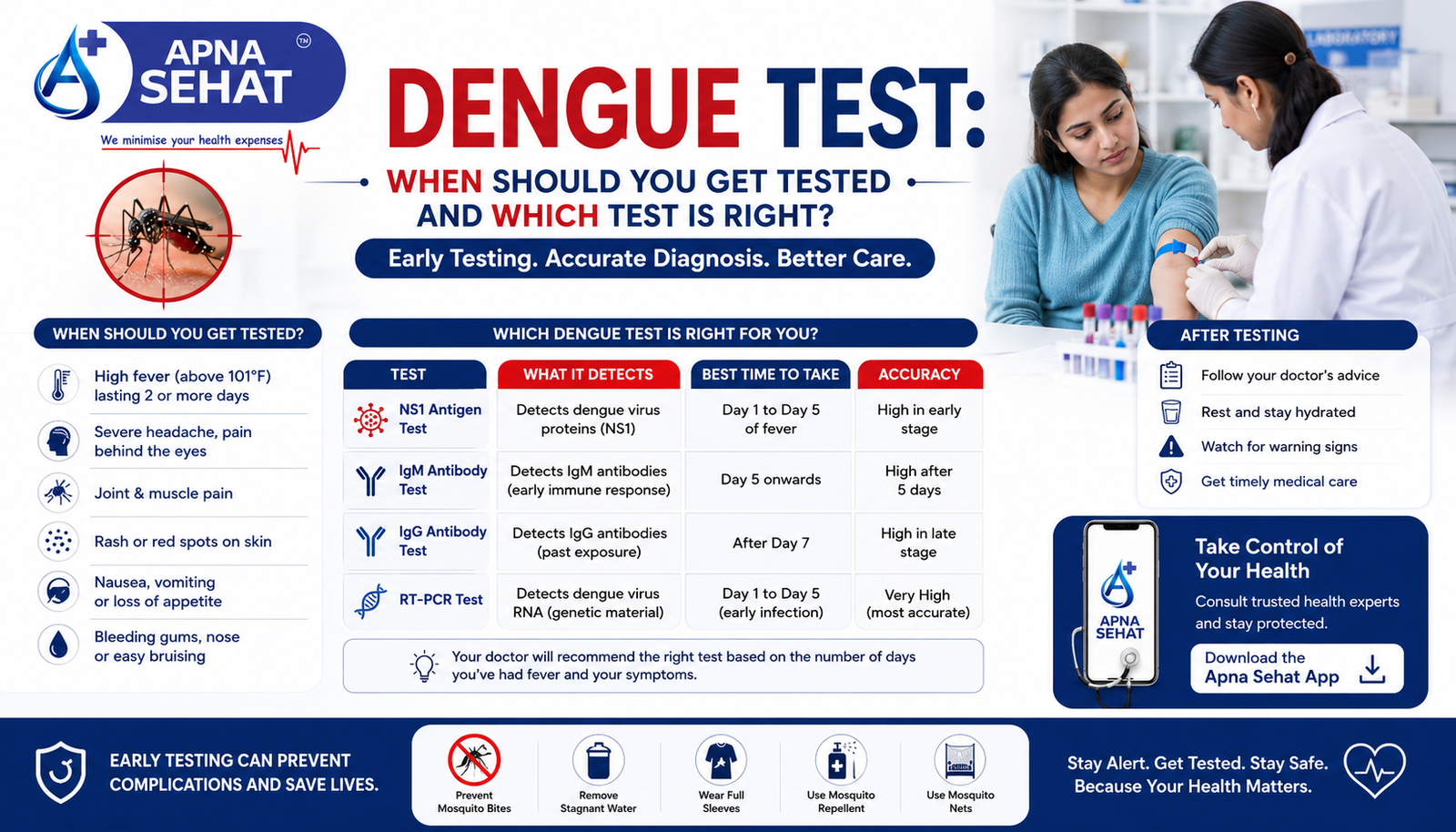
Dengue testing includes different options such as NS1 antigen, IgM and IgG antibody tests, and molecular tests such as RT-PCR. Each test detects different signs of infection and works best at different stages.
Therefore, choosing the right test at the right time matters.
When Should You Get a Dengue Test?
You should speak to a doctor if you develop symptoms that could indicate dengue, especially during periods when dengue is circulating in your area.
Common symptoms include:
-
Sudden high fever
-
Severe headache
-
Muscle and joint pain
-
Pain behind the eyes
-
Nausea or vomiting
-
Skin rash
-
Weakness and tiredness
However, these symptoms can also occur with viral fever, malaria, chikungunya and other infections.
That is why symptoms alone cannot confirm dengue. A healthcare professional can assess your condition and decide which tests are appropriate.
Dengue Test Timing: Which Test Is Used When?
The timing of your test matters because the dengue virus and antibodies appear at different stages of infection.
Day 1 to Day 7: NS1 Antigen Test
The NS1 antigen test can help detect dengue during the early stage of illness.
NS1 is a protein produced by the dengue virus. It can usually be detected during the first seven days of symptoms.
Therefore, an NS1 test may be useful when you have recently developed fever and your doctor suspects dengue.
A positive NS1 result supports a diagnosis of dengue. However, a negative NS1 result does not always rule out dengue.
Day 1 to Day 7: RT-PCR or Other Molecular Tests
Molecular tests such as RT-PCR can detect dengue virus genetic material.
These tests work best during the early phase, particularly within the first seven days of illness.
A positive molecular test can confirm current dengue infection.
However, testing strategy can vary depending on the patient, laboratory and clinical situation.
Around Day 4–5 Onwards: IgM Test
The dengue IgM test looks for antibodies produced by your immune system after infection.
IgM antibodies typically become detectable around 4–5 days after symptoms begin.
As a result, IgM can become increasingly useful as the illness progresses.
During the first few days, however, a negative IgM result does not necessarily rule out dengue.
IgG Test: What Does It Tell You?
The IgG test detects dengue antibodies that can remain in the body after infection.
A single IgG result generally does not provide a reliable way to diagnose acute dengue because it can reflect a previous dengue infection or exposure to related viruses.
Doctors may use IgG results in combination with other tests and, in some situations, paired samples to understand whether an infection is recent.
Therefore, do not interpret an IgG report on your own.
Dengue Test by Day: Simple Guide
| Days Since Symptoms Started | Tests That May Be Considered |
|---|---|
| Day 1–3 | NS1 antigen / molecular testing; doctor may also consider IgM depending on the situation |
| Day 4–7 | NS1 + IgM and/or molecular testing |
| After Day 7 | IgM becomes an important testing option; further testing may depend on clinical suspicion |
| Any stage | Doctor may recommend additional blood tests or tests for other infections |
This is a general guide, not a personal testing prescription. Your doctor may recommend a different combination based on your symptoms, illness stage, previous dengue exposure and local testing practices.
Why Should You Not Wait Too Long?
Some people wait several days before getting medical advice because they assume the fever is just viral fever.
That can be risky if the illness is actually dengue or another infection that needs monitoring.
Early medical evaluation can help your doctor decide whether dengue testing is needed. It can also help identify other possible causes of fever.
So, if your fever continues or your symptoms become more severe, do not rely only on home remedies or online symptom searches.
Need a Dengue Test or Doctor Consultation?
You do not have to spend time guessing which healthcare service you need.
With Apna Sehat, you can explore healthcare services and connect with doctor consultation and diagnostic options.
Download Apna Sehat App and make doctor consultations and diagnostic healthcare services easier to access.
Does a Dengue Test Include a Platelet Test?
This is a common question.
A dengue-specific test and a CBC/platelet count are not the same thing.
NS1, IgM, IgG or molecular tests look for evidence related to dengue infection. A CBC can provide information about blood counts, including platelet levels.
Doctors may monitor platelet counts and other blood parameters during dengue because the results can help with clinical monitoring.
However, platelet count alone does not determine how severe dengue is.
Your doctor will consider your symptoms, hydration, bleeding, blood pressure and other clinical findings.
Can a Dengue Test Be Negative Even If You Have Dengue?
Yes, depending on the test and the stage of illness.
For example, an NS1 or molecular test may become less useful later in the illness. Similarly, IgM may not yet be detectable during the earliest days.
Therefore, a negative result does not always provide the complete answer.
If your symptoms strongly suggest dengue, your doctor may recommend repeat testing, a different test or testing for another infection.
When Should You See a Doctor Immediately?
Seek urgent medical care if you develop warning signs such as:
-
Severe abdominal pain
-
Persistent vomiting
-
Bleeding from the nose or gums
-
Blood in vomit or stool
-
Unusual bruising
-
Extreme weakness or restlessness
-
Difficulty breathing
-
Confusion or unusual drowsiness
-
Sudden worsening of your condition
Do not wait for a home test result if you have serious symptoms.
Dengue Test: Common Mistakes to Avoid
1. Taking the wrong test at the wrong time
Different tests work better at different stages.
2. Assuming a negative test always rules out dengue
The timing and type of test matter.
3. Checking only platelet count
Platelets provide useful information, but they do not confirm dengue by themselves.
4. Self-diagnosing from symptoms
Dengue can resemble several other infections.
5. Ignoring worsening symptoms
Severe symptoms require prompt medical evaluation.
Final Takeaway
The right dengue test depends on when your symptoms started.
During the first seven days, doctors may consider tests such as NS1 antigen or molecular testing, often alongside IgM. From around day 4–5, IgM becomes increasingly useful. After the first week, IgM becomes an important option, while the choice of additional testing depends on the clinical situation.
Most importantly, do not choose a dengue test only by reading online recommendations. Speak to a qualified healthcare professional and follow the testing advice appropriate for your symptoms.
Download Apna Sehat App
Fever should never be ignored when symptoms are persistent or worsening.
Download Apna Sehat App to explore doctor consultations and diagnostic healthcare services in a convenient way.
Get the right healthcare guidance at the right time.
डेंगू टेस्ट: कब करवाएं और कौन सा टेस्ट सही है?
भारत में मानसून और मानसून के बाद डेंगू का खतरा बढ़ सकता है। अगर आपको अचानक तेज बुखार, शरीर में तेज दर्द, सिरदर्द, कमजोरी या डेंगू जैसे अन्य लक्षण हो रहे हैं, तो आपके मन में सवाल आ सकता है—डेंगू टेस्ट कब करवाना चाहिए?
इसका जवाब इस बात पर भी निर्भर करता है कि आपके symptoms शुरू हुए कितने दिन हुए हैं।
डेंगू की जांच के लिए NS1 antigen, IgM और IgG antibody tests तथा RT-PCR जैसे molecular tests उपलब्ध हैं। ये अलग-अलग तरीके से infection के संकेतों को detect करते हैं और बीमारी के अलग-अलग stages में ज्यादा उपयोगी हो सकते हैं।
इसलिए सही समय पर सही टेस्ट करवाना महत्वपूर्ण है।
डेंगू टेस्ट कब करवाना चाहिए?
अगर आपको ऐसे symptoms हैं जो डेंगू की ओर इशारा कर सकते हैं, तो डॉक्टर से सलाह लें। खासकर तब जब आपके क्षेत्र में डेंगू के मामले बढ़ रहे हों।
डेंगू के सामान्य symptoms में शामिल हैं:
-
अचानक तेज बुखार
-
तेज सिरदर्द
-
मांसपेशियों और जोड़ों में दर्द
-
आंखों के पीछे दर्द
-
Nausea या vomiting
-
Skin rash
-
कमजोरी और थकान
हालांकि, ये symptoms viral fever, malaria, chikungunya और अन्य infections में भी हो सकते हैं।
इसलिए केवल symptoms देखकर डेंगू की पुष्टि नहीं की जा सकती। डॉक्टर आपकी स्थिति देखकर तय कर सकते हैं कि कौन सा test आपके लिए सही है।
Dengue Test Timing: किस दिन कौन सा टेस्ट?
बीमारी के अलग-अलग stages में dengue virus और antibodies अलग तरीके से detect होते हैं।
Day 1 से Day 7: NS1 Antigen Test
NS1 antigen test बीमारी के शुरुआती दिनों में डेंगू detect करने में मदद कर सकता है।
NS1 एक protein है जो dengue virus infection के दौरान बनता है। यह आमतौर पर symptoms शुरू होने के पहले सात दिनों में detect हो सकता है।
इसलिए अगर हाल ही में तेज बुखार शुरू हुआ है और डॉक्टर को dengue का शक है, तो NS1 test उपयोगी हो सकता है।
Positive NS1 result dengue infection का मजबूत संकेत देता है। हालांकि, negative NS1 result हमेशा dengue को पूरी तरह rule out नहीं करता।
Day 1 से Day 7: RT-PCR या Molecular Test
RT-PCR जैसे molecular tests dengue virus के genetic material को detect करते हैं।
ये tests बीमारी के शुरुआती phase में, खासकर पहले सात दिनों में, ज्यादा उपयोगी हो सकते हैं।
Positive molecular test current dengue infection की पुष्टि कर सकता है।
हालांकि, कौन सा test करवाना है, यह patient की condition, testing facility और clinical situation पर निर्भर कर सकता है।
लगभग Day 4–5 के बाद: IgM Test
Dengue IgM test शरीर द्वारा infection के जवाब में बनाए गए antibodies को detect करता है।
IgM antibodies आमतौर पर symptoms शुरू होने के लगभग 4–5 दिन बाद detect होने लगती हैं।
इसलिए बीमारी आगे बढ़ने के साथ IgM test ज्यादा useful हो सकता है।
हालांकि, शुरुआती दिनों में negative IgM result होने से dengue पूरी तरह rule out नहीं होता।
IgG Test क्या बताता है?
IgG test dengue antibodies को detect करता है। ये antibodies infection के बाद शरीर में लंबे समय तक रह सकती हैं।
एक single IgG result से acute dengue की पुष्टि करना आमतौर पर सही तरीका नहीं है। इसका कारण यह है कि IgG पुराने dengue infection या कुछ related viruses के exposure को भी reflect कर सकता है।
कुछ situations में डॉक्टर अन्य tests के साथ IgG results को देखकर infection के बारे में जानकारी प्राप्त कर सकते हैं।
इसलिए IgG report को खुद से interpret न करें।
Dengue Test by Day: आसान Guide
| Symptoms शुरू होने के बाद | कौन से Tests Consider किए जा सकते हैं |
|---|---|
| Day 1–3 | NS1 antigen / molecular testing; स्थिति के अनुसार IgM भी consider हो सकता है |
| Day 4–7 | NS1 + IgM और/या molecular testing |
| Day 7 के बाद | IgM एक महत्वपूर्ण testing option बन जाता है; आगे की जांच clinical situation पर निर्भर करती है |
| किसी भी stage पर | डॉक्टर CBC या अन्य infections की जांच की सलाह दे सकते हैं |
यह एक general guide है। इसे personal medical prescription न समझें। आपकी symptoms, illness stage, previous dengue exposure और local testing practices के आधार पर डॉक्टर अलग testing strategy चुन सकते हैं।
बहुत देर तक टेस्ट क्यों नहीं टालना चाहिए?
कुछ लोग कई दिनों तक fever को सामान्य viral fever समझकर इंतजार करते रहते हैं।
अगर infection dengue या किसी अन्य ऐसी बीमारी के कारण है जिसे medical monitoring की जरूरत है, तो इससे care में देरी हो सकती है।
समय पर medical evaluation से डॉक्टर तय कर सकते हैं कि dengue test की जरूरत है या नहीं। साथ ही, fever के दूसरे संभावित कारणों की जांच भी की जा सकती है।
इसलिए अगर बुखार लगातार बना हुआ है या symptoms बढ़ रहे हैं, तो केवल home remedies या online symptom searches पर निर्भर न रहें।
Dengue Test या Doctor Consultation चाहिए?
कौन सी healthcare service लेनी है, इसका अंदाजा लगाने में समय बर्बाद करने की जरूरत नहीं है।
Apna Sehat के जरिए आप healthcare services explore कर सकते हैं और doctor consultation तथा diagnostic options से जुड़ी सुविधाएं देख सकते हैं।
Apna Sehat App डाउनलोड करें और doctor consultation तथा diagnostic healthcare services को आसानी से explore करें।
क्या Dengue Test में Platelet Test भी होता है?
यह एक common सवाल है।
Dengue-specific test और CBC/platelet count एक ही test नहीं हैं।
NS1, IgM, IgG या molecular tests dengue infection के evidence को detect करते हैं। वहीं CBC blood counts के बारे में जानकारी देता है, जिसमें platelet count भी शामिल है।
Dengue में डॉक्टर platelet count और दूसरे blood parameters को monitor कर सकते हैं।
लेकिन सिर्फ platelet count से dengue की severity तय नहीं होती।
डॉक्टर symptoms, hydration, bleeding, blood pressure और अन्य clinical findings को भी देखते हैं।
क्या Dengue होने पर भी Test Negative आ सकता है?
हां, test और बीमारी के stage के आधार पर ऐसा हो सकता है।
उदाहरण के लिए, बीमारी के बाद के दिनों में NS1 या molecular testing की usefulness कम हो सकती है। इसी तरह, बीमारी के शुरुआती दिनों में IgM अभी detect न हो पाए।
इसलिए negative result हमेशा पूरी तस्वीर नहीं बताता।
अगर symptoms dengue की ओर मजबूत संकेत देते हैं, तो डॉक्टर repeat testing, दूसरा test या किसी अन्य infection की जांच की सलाह दे सकते हैं।
डॉक्टर को तुरंत कब दिखाना चाहिए?
इन warning signs को नजरअंदाज न करें:
-
तेज पेट दर्द
-
लगातार vomiting
-
नाक या मसूड़ों से bleeding
-
Vomit या stool में blood
-
शरीर पर असामान्य bruising
-
बहुत ज्यादा कमजोरी या बेचैनी
-
सांस लेने में परेशानी
-
Confusion या बहुत ज्यादा नींद आना
-
अचानक हालत बिगड़ना
अगर गंभीर symptoms हैं, तो home test result का इंतजार न करें। तुरंत medical care लें।
Dengue Test करवाते समय इन गलतियों से बचें
1. गलत समय पर गलत test करवाना
हर test बीमारी के हर stage में समान रूप से useful नहीं होता।
2. Negative report को हमेशा final मान लेना
Test का type और testing timing दोनों महत्वपूर्ण हैं।
3. केवल platelet count देखना
Platelet count useful हो सकता है, लेकिन इससे अकेले dengue की पुष्टि नहीं होती।
4. Symptoms देखकर खुद diagnosis करना
Dengue कई दूसरी infections जैसा दिख सकता है।
5. Symptoms बिगड़ने पर भी इंतजार करना
Severe symptoms में prompt medical evaluation जरूरी है।
निष्कर्ष
सही dengue test इस बात पर निर्भर करता है कि symptoms शुरू हुए कितने दिन हुए हैं।
पहले सात दिनों में डॉक्टर NS1 antigen या molecular testing पर विचार कर सकते हैं और situation के अनुसार IgM भी उपयोगी हो सकता है। लगभग day 4–5 से IgM detect होना शुरू हो सकता है। पहले सप्ताह के बाद IgM एक महत्वपूर्ण testing option बन जाता है।
सबसे जरूरी बात यह है कि केवल online information देखकर खुद से dengue test चुनने या report interpret करने से बचें। Qualified healthcare professional से सलाह लें और अपनी symptoms तथा illness stage के अनुसार recommended testing करवाएं।
Apna Sehat App डाउनलोड करें
लगातार या बढ़ते हुए बुखार को नजरअंदाज न करें।
Apna Sehat App डाउनलोड करें और doctor consultation तथा diagnostic healthcare services को convenient तरीके से explore करें।
सही समय पर सही healthcare guidance लें।