During the monsoon season in India, fever is a common health concern. Dengue and viral fever can both cause high temperature, body pain, weakness and headache. Because the symptoms often overlap, many people wonder: Is it dengue or viral fever?
The truth is that you cannot always tell the difference from symptoms alone. Dengue requires medical evaluation and, when appropriate, blood testing.
Knowing the common symptoms, warning signs and testing options can help you take the right step at the right time.
What Is Dengue?
Dengue is a viral infection spread by infected Aedes mosquitoes. It commonly increases during and after the monsoon in many parts of India.
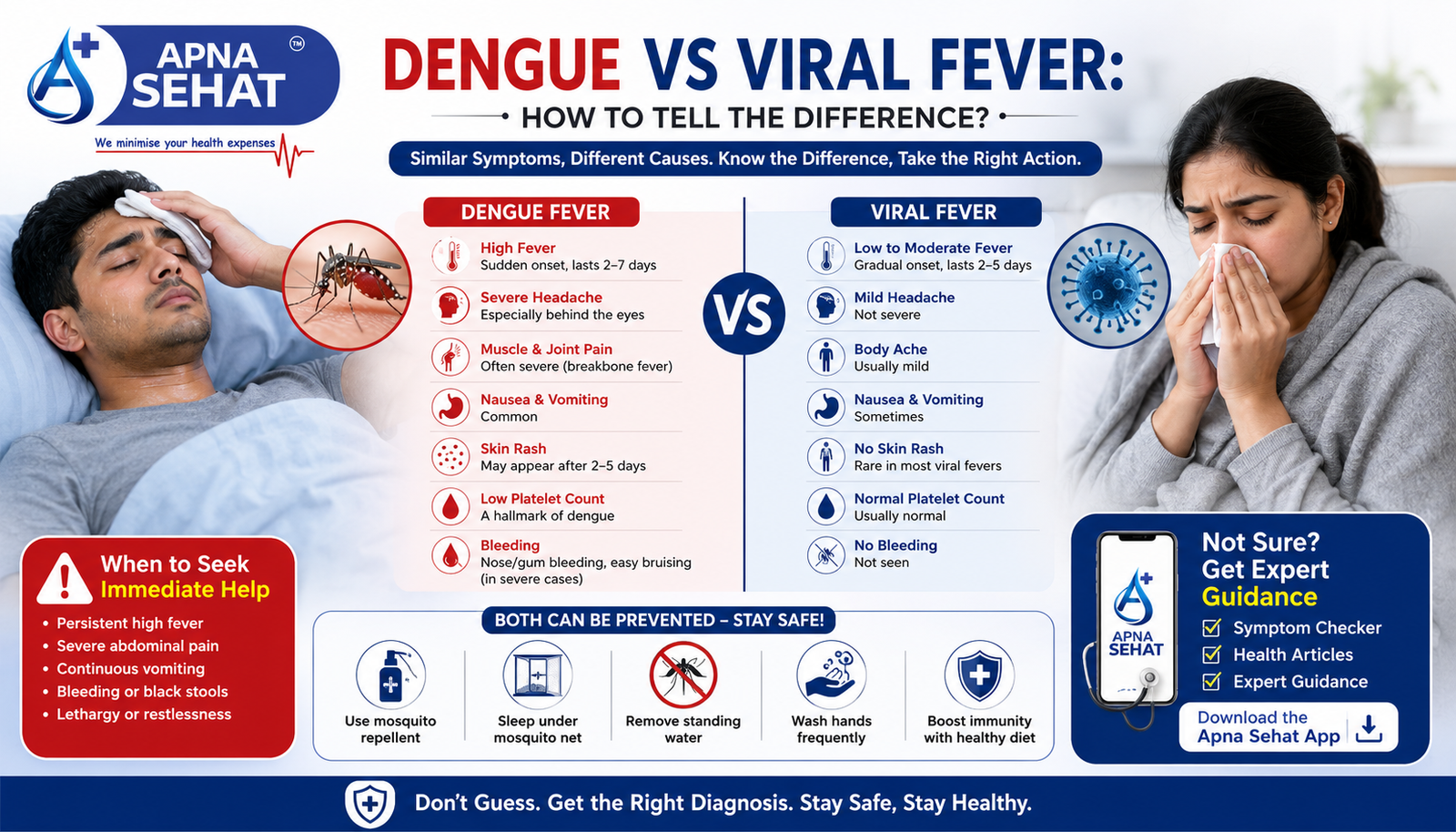
Dengue may cause sudden high fever, severe headache, muscle and joint pain, pain behind the eyes, nausea, vomiting and skin rash.
Most people recover with proper medical care. However, some cases can become severe. Therefore, you should not ignore warning signs.
What Is Viral Fever?
“Viral fever” is a general term used for fever caused by a viral infection. Several viruses can cause it.
Viral fever may lead to:
-
Fever and chills
-
Headache
-
Body ache
-
Weakness and tiredness
-
Sore throat
-
Cough or cold symptoms
-
Runny nose
-
Muscle pain
-
Reduced appetite
The symptoms depend on the virus causing the infection.
Dengue vs Viral Fever: Key Differences
Dengue and viral fever can look similar in the beginning. However, some symptoms may give you clues.
1. Type of Fever
Dengue: Fever often starts suddenly and can become high.
Viral fever: Fever may also become high, but its pattern depends on the infection.
Therefore, fever level alone cannot confirm dengue.
2. Body and Joint Pain
Dengue: Muscle and joint pain can become intense. Some people describe dengue as causing severe body pain.
Viral fever: Body ache can also occur, but its intensity varies from person to person.
3. Headache and Pain Behind the Eyes
Dengue: Severe headache and pain behind the eyes are commonly reported.
Viral fever: Headache can occur, but pain behind the eyes is less characteristic.
Still, these symptoms do not confirm dengue by themselves.
4. Skin Rash
Dengue: A skin rash may appear during the illness.
Viral fever: Some viral infections can also cause rashes.
So, a rash does not automatically mean dengue.
5. Cough, Cold and Sore Throat
Dengue: Cough and cold symptoms are generally less prominent.
Viral fever: Cough, runny nose and sore throat are common with several viral respiratory infections.
However, not every viral infection causes these symptoms.
6. Nausea and Vomiting
Both dengue and viral infections can cause nausea or vomiting.
Repeated vomiting, especially along with severe abdominal pain or weakness, needs medical attention.
Can Symptoms Alone Confirm Dengue?
No.
This is one of the most important points to remember.
Dengue symptoms can overlap with viral fever, malaria, chikungunya and other infections. Therefore, a doctor may recommend a dengue test or other blood tests based on your symptoms, fever duration and clinical condition.
The right test can also depend on the stage of the illness.
Do not start treatment based only on an online symptom search or a single symptom.
Dengue vs Viral Fever: When Should You Get Tested?
Consider speaking to a doctor if your fever is high, persistent or accompanied by significant body pain, headache, vomiting, rash or unusual weakness.
A healthcare professional can assess your symptoms and decide whether you need a dengue test, complete blood count or other investigations.
Need a Doctor Consultation or Diagnostic Test?
Instead of waiting and guessing, make healthcare more convenient with Apna Sehat.
You can use the Apna Sehat platform to explore healthcare services and connect with healthcare providers and diagnostic services.
Download Apna Sehat App and make your healthcare journey simpler.
What About Platelets in Dengue?
Platelet count often causes anxiety among dengue patients and families.
However, platelet count alone does not tell you how severe dengue is.
Doctors also consider symptoms, bleeding, hydration, blood pressure, urine output and other clinical findings.
A falling platelet count can be important, but you should not panic over one report. Similarly, a normal platelet count does not always rule out dengue or guarantee that the illness is mild.
Follow your doctor's advice and complete the recommended monitoring.
Dengue Warning Signs You Should Never Ignore
Some symptoms require urgent medical attention.
Watch for:
-
Severe abdominal pain
-
Persistent or repeated vomiting
-
Bleeding from the nose or gums
-
Blood in vomit or stool
-
Unusual bruising
-
Extreme weakness or restlessness
-
Difficulty breathing
-
Confusion or unusual drowsiness
-
Sudden worsening after fever starts improving
If these symptoms appear, seek urgent medical care.
Dengue vs Viral Fever: Quick Comparison
| Symptom | Dengue | Viral Fever |
|---|---|---|
| High fever | Common | Common |
| Severe body pain | Common | Possible |
| Severe headache | Common | Possible |
| Pain behind eyes | More characteristic | Less typical |
| Skin rash | Possible | Possible |
| Cough/runny nose | Less typical | Common in many viral infections |
| Nausea/vomiting | Common | Possible |
| Bleeding | Warning sign | Not typical |
| Platelet changes | Can occur | Depends on infection |
| Testing | May require dengue-specific testing | Depends on suspected infection |
Remember that this table provides general guidance. It cannot replace a medical examination or diagnostic testing.
How to Stay Safe During Dengue Season
You can reduce mosquito exposure with simple precautions.
-
Use mosquito repellent.
-
Wear clothes that cover your arms and legs.
-
Use window screens and mosquito nets where appropriate.
-
Remove stagnant water around your home.
-
Empty water from plant pots, buckets and containers regularly.
-
Keep water-storage containers properly covered.
These steps are especially important during the monsoon and post-monsoon period.
Final Takeaway
Dengue vs viral fever can be difficult to distinguish based on symptoms alone.
Both conditions can cause fever, headache, body pain and weakness. However, symptoms such as severe body pain, pain behind the eyes, rash, vomiting or unusual bleeding may need closer medical evaluation.
Do not rely only on platelet counts. Do not self-diagnose. If your fever persists or your symptoms become severe, consult a qualified healthcare professional and ask whether diagnostic testing is appropriate.
Download Apna Sehat App
Your health deserves timely attention.
Download Apna Sehat App to make it easier to explore doctor consultations and diagnostic healthcare services.
Don't ignore persistent fever. Get the right healthcare guidance at the right time.
डेंगू बनाम वायरल फीवर: अंतर कैसे पहचानें?
भारत में मानसून के दौरान बुखार एक आम स्वास्थ्य समस्या बन जाता है। डेंगू और वायरल फीवर दोनों में तेज बुखार, शरीर में दर्द, कमजोरी और सिरदर्द हो सकता है। इसलिए कई लोगों के मन में सवाल आता है—यह डेंगू है या वायरल फीवर?
सिर्फ लक्षण देखकर हमेशा दोनों में अंतर करना आसान नहीं होता। डेंगू की पुष्टि के लिए डॉक्टर की जांच और जरूरत पड़ने पर ब्लड टेस्ट की सलाह दी जा सकती है।
सही लक्षणों को समझने और warning signs पहचानने से आप समय पर सही कदम उठा सकते हैं।
डेंगू क्या है?
डेंगू एक वायरल संक्रमण है, जो संक्रमित Aedes मच्छर के काटने से फैलता है। भारत के कई हिस्सों में मानसून और मानसून के बाद डेंगू के मामले बढ़ सकते हैं।
डेंगू में अचानक तेज बुखार, तेज सिरदर्द, मांसपेशियों और जोड़ों में दर्द, आंखों के पीछे दर्द, nausea, vomiting और skin rash हो सकते हैं।
अधिकांश लोग उचित देखभाल के साथ ठीक हो जाते हैं। हालांकि, कुछ मामलों में डेंगू गंभीर हो सकता है। इसलिए warning signs को नजरअंदाज नहीं करना चाहिए।
वायरल फीवर क्या है?
“वायरल फीवर” किसी एक बीमारी का नाम नहीं है। यह अलग-अलग वायरल संक्रमणों के कारण होने वाले बुखार के लिए इस्तेमाल किया जाने वाला सामान्य शब्द है।
वायरल फीवर में ये लक्षण हो सकते हैं:
-
बुखार और ठंड लगना
-
सिरदर्द
-
शरीर में दर्द
-
कमजोरी और थकान
-
गले में खराश
-
खांसी या जुकाम
-
नाक बहना
-
मांसपेशियों में दर्द
-
भूख कम लगना
लक्षण इस बात पर निर्भर करते हैं कि कौन सा वायरस संक्रमण का कारण बना है।
डेंगू बनाम वायरल फीवर: मुख्य अंतर
शुरुआत में डेंगू और वायरल फीवर एक जैसे लग सकते हैं। हालांकि, कुछ लक्षण डॉक्टर को सही दिशा में जांच करने में मदद कर सकते हैं।
1. बुखार का प्रकार
डेंगू: बुखार अचानक शुरू हो सकता है और काफी तेज हो सकता है।
वायरल फीवर: इसमें भी तेज बुखार हो सकता है, लेकिन बुखार का पैटर्न संक्रमण के प्रकार पर निर्भर करता है।
इसलिए केवल बुखार की तीव्रता देखकर डेंगू की पुष्टि नहीं की जा सकती।
2. शरीर और जोड़ों में दर्द
डेंगू: मांसपेशियों और जोड़ों में तेज दर्द हो सकता है। कई लोग इसे बहुत ज्यादा body pain के रूप में महसूस करते हैं।
वायरल फीवर: शरीर में दर्द हो सकता है, लेकिन इसकी तीव्रता अलग-अलग हो सकती है।
3. सिरदर्द और आंखों के पीछे दर्द
डेंगू: तेज सिरदर्द और आंखों के पीछे दर्द डेंगू में आम लक्षण हैं।
वायरल फीवर: सिरदर्द हो सकता है, लेकिन आंखों के पीछे दर्द कम typical होता है।
फिर भी, केवल इन लक्षणों से डेंगू की पुष्टि नहीं होती।
4. त्वचा पर चकत्ते
डेंगू: बीमारी के दौरान skin rash हो सकता है।
वायरल फीवर: कुछ वायरल संक्रमणों में भी skin rash हो सकता है।
इसलिए केवल rash देखकर डेंगू मान लेना सही नहीं है।
5. खांसी, जुकाम और गले में खराश
डेंगू: खांसी और जुकाम आमतौर पर प्रमुख लक्षण नहीं होते।
वायरल फीवर: कई वायरल respiratory infections में खांसी, नाक बहना और गले में खराश आम हो सकते हैं।
हालांकि, हर वायरल संक्रमण में ये लक्षण नहीं होते।
6. Nausea और Vomiting
डेंगू और कई वायरल संक्रमणों में nausea और vomiting हो सकती है।
अगर बार-बार vomiting हो रही है, खासकर severe abdominal pain या बहुत ज्यादा कमजोरी के साथ, तो डॉक्टर से तुरंत संपर्क करें।
क्या केवल लक्षण देखकर डेंगू की पुष्टि हो सकती है?
नहीं।
यह बात याद रखना बहुत जरूरी है।
डेंगू के लक्षण वायरल फीवर, मलेरिया, चिकनगुनिया और अन्य infections से मिल सकते हैं। इसलिए डॉक्टर आपके लक्षणों, बुखार की अवधि और आपकी स्थिति को देखकर dengue test या अन्य blood tests की सलाह दे सकते हैं।
कौन सा टेस्ट करना है, यह बीमारी के stage पर भी निर्भर कर सकता है।
सिर्फ online symptom search के आधार पर खुद से diagnosis या treatment शुरू न करें।
Dengue Test या Doctor Consultation कब जरूरी है?
अगर बुखार तेज है, लगातार बना हुआ है या इसके साथ शरीर में ज्यादा दर्द, सिरदर्द, vomiting, rash या बहुत ज्यादा कमजोरी है, तो डॉक्टर से सलाह लेना बेहतर है।
Healthcare professional आपके symptoms का assessment करके तय कर सकते हैं कि आपको dengue test, CBC या किसी अन्य जांच की जरूरत है या नहीं।
Doctor Consultation या Diagnostic Test चाहिए?
बार-बार अंदाजा लगाने के बजाय Apna Sehat के साथ healthcare को आसान बनाएं।
Apna Sehat पर आप healthcare services explore कर सकते हैं और doctor consultation तथा diagnostic services से जुड़ी सुविधाओं का लाभ उठा सकते हैं।
Internal link suggestion: इस section को Apna Sehat के relevant doctor consultation या diagnostic test booking page से link करें।
CTA: Apna Sehat App डाउनलोड करें और अपनी healthcare journey को आसान बनाएं।
डेंगू में Platelets का क्या महत्व है?
डेंगू में platelet count को लेकर मरीजों और परिवारों में अक्सर चिंता रहती है।
लेकिन सिर्फ platelet count से डेंगू की गंभीरता तय नहीं होती।
डॉक्टर bleeding, hydration, blood pressure, urine output और अन्य clinical findings के साथ platelet count को देखते हैं।
Platelet count कम होना महत्वपूर्ण हो सकता है, लेकिन एक ही report देखकर घबराने की जरूरत नहीं है। इसी तरह, normal platelet count होने से डेंगू पूरी तरह rule out नहीं होता।
अपने डॉक्टर की सलाह के अनुसार monitoring और tests करवाएं।
डेंगू के Warning Signs जिन्हें नजरअंदाज न करें
कुछ लक्षणों में तुरंत medical attention की जरूरत हो सकती है।
इन signs पर ध्यान दें:
-
तेज पेट दर्द
-
लगातार या बार-बार vomiting
-
नाक या मसूड़ों से bleeding
-
Vomit या stool में blood
-
शरीर पर असामान्य bruising
-
बहुत ज्यादा कमजोरी या बेचैनी
-
सांस लेने में परेशानी
-
Confusion या बहुत ज्यादा नींद आना
-
बुखार कम होने के बाद अचानक हालत बिगड़ना
इनमें से कोई गंभीर warning sign दिखाई दे तो तुरंत medical care लें।
डेंगू बनाम वायरल फीवर: आसान तुलना
| लक्षण | डेंगू | वायरल फीवर |
|---|---|---|
| तेज बुखार | आम | आम |
| शरीर में तेज दर्द | आम | हो सकता है |
| तेज सिरदर्द | आम | हो सकता है |
| आंखों के पीछे दर्द | ज्यादा characteristic | कम typical |
| Skin rash | हो सकता है | हो सकता है |
| खांसी/नाक बहना | कम typical | कई viral infections में आम |
| Nausea/Vomiting | आम | हो सकता है |
| Bleeding | Warning sign | सामान्य नहीं |
| Platelet में बदलाव | हो सकता है | संक्रमण पर निर्भर |
| Testing | Dengue-specific testing की जरूरत हो सकती है | संदिग्ध infection पर निर्भर |
यह तुलना केवल सामान्य जानकारी देती है। यह medical examination या diagnostic testing का विकल्प नहीं है।
डेंगू के मौसम में खुद को कैसे सुरक्षित रखें?
मच्छरों से बचाव के लिए कुछ आसान कदम अपनाएं।
-
Mosquito repellent का इस्तेमाल करें।
-
पूरी बाजू के कपड़े पहनें।
-
जरूरत के अनुसार mosquito nets और window screens का इस्तेमाल करें।
-
घर के आसपास जमा पानी हटाएं।
-
Plant pots, buckets और containers में जमा पानी नियमित रूप से खाली करें।
-
पानी रखने वाले containers को ढककर रखें।
मानसून और मानसून के बाद इन सावधानियों पर खास ध्यान दें।
निष्कर्ष
डेंगू बनाम वायरल फीवर में अंतर केवल लक्षणों से करना हमेशा आसान नहीं होता।
दोनों में बुखार, सिरदर्द, शरीर में दर्द और कमजोरी हो सकती है। हालांकि, तेज body pain, आंखों के पीछे दर्द, rash, vomiting या unusual bleeding जैसे symptoms में medical evaluation जरूरी हो सकता है।
सिर्फ platelet count पर निर्भर न रहें। खुद से diagnosis न करें। अगर बुखार लगातार बना रहता है या symptoms गंभीर होते हैं, तो qualified healthcare professional से सलाह लें और पूछें कि diagnostic testing की जरूरत है या नहीं।
Apna Sehat App डाउनलोड करें
आपकी सेहत को समय पर ध्यान देने की जरूरत है।
Apna Sehat App डाउनलोड करें और doctor consultation तथा diagnostic healthcare services को आसानी से explore करें।
लगातार बुखार को नजरअंदाज न करें। सही समय पर सही healthcare guidance लें।