Fever during the monsoon or post-monsoon season can have many causes. Malaria and dengue are two important mosquito-borne diseases that can cause similar symptoms.
However, they are caused by different infections and need different diagnostic approaches. Therefore, knowing the difference between malaria vs dengue can help you seek timely medical care.
What Is Malaria?
Malaria is a mosquito-borne disease caused by Plasmodium parasites. In India, malaria remains an important public health concern, particularly in areas where mosquito transmission occurs.
A person with malaria may develop fever, chills, sweating, headache, weakness and body aches. Some people may also experience nausea or vomiting.
Because these symptoms can overlap with other infections, symptoms alone cannot confirm malaria.
What Is Dengue?
Dengue is a viral infection transmitted mainly by infected Aedes mosquitoes.
Common dengue symptoms include high fever, headache, body pain, pain behind the eyes, nausea, vomiting and skin rash.
Dengue can sometimes become severe. Warning signs such as severe abdominal pain, persistent vomiting, bleeding, breathing difficulty, extreme weakness or unusual restlessness need urgent medical attention.
Malaria vs Dengue: Key Differences
Although both diseases can cause fever, some patterns can help doctors decide which tests may be appropriate.
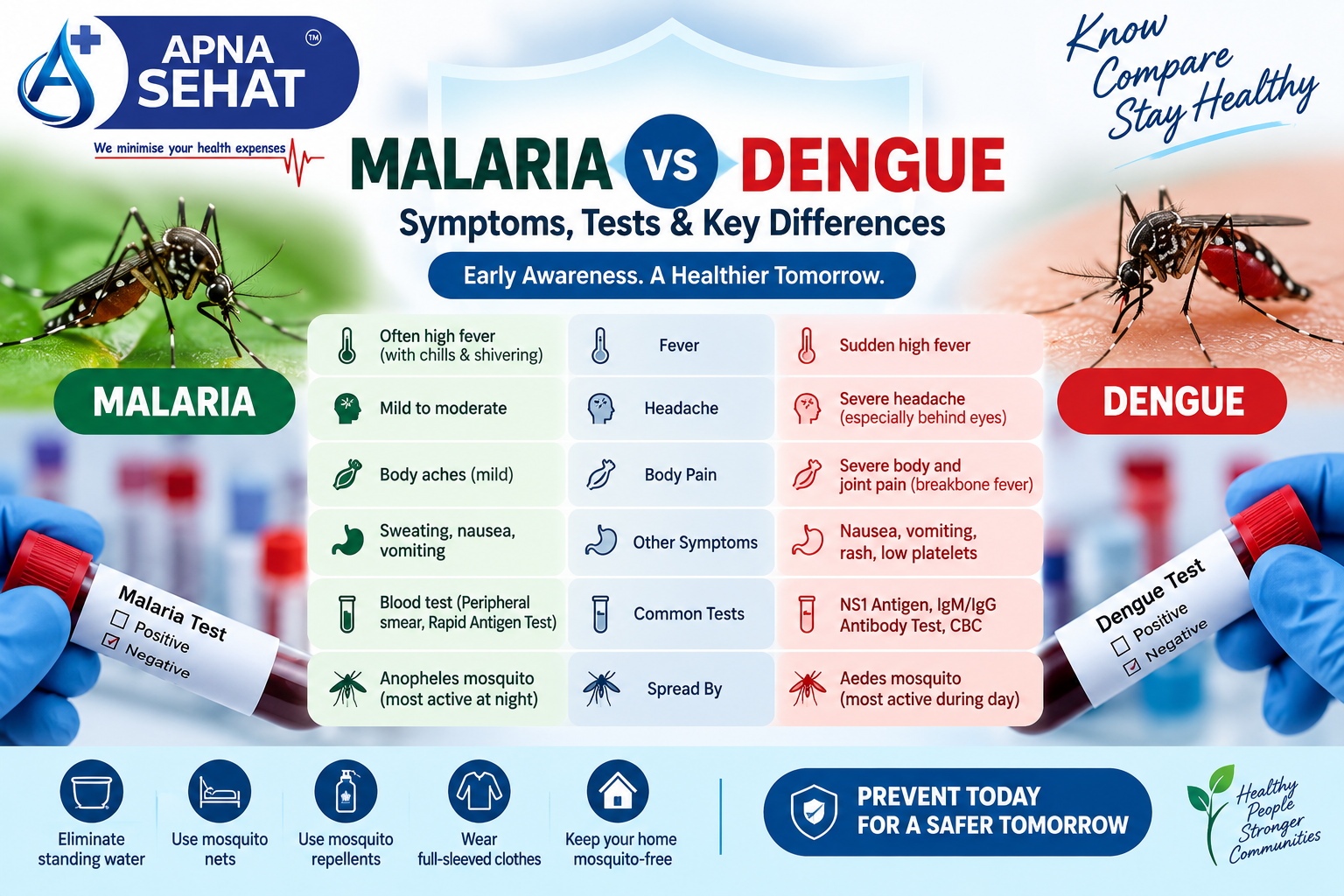
| Feature | Malaria | Dengue |
|---|---|---|
| Cause | Plasmodium parasite | Dengue virus |
| Spread | Infected Anopheles mosquitoes | Infected Aedes mosquitoes |
| Fever | May occur with chills and sweating | Often high fever |
| Chills | Common in malaria | Less characteristic |
| Body pain | Can occur | Often prominent |
| Headache | Common | Common and may be severe |
| Pain behind eyes | Less typical | Can occur |
| Skin rash | Less common | Can occur |
| Platelet count | May change in some cases | Can decrease, but platelet count alone does not determine severity |
| Main testing | Blood smear or rapid diagnostic tests | NS1, molecular tests and/or antibody tests depending on illness stage |
These differences are useful clues, but they do not replace medical evaluation or laboratory testing.
Malaria Symptoms You Should Know
Typical malaria symptoms can include:
-
Fever
-
Chills or shivering
-
Sweating
-
Headache
-
Muscle or body aches
-
Weakness and tiredness
-
Nausea or vomiting
The pattern and severity can vary. Therefore, a person with fever should not assume that chills automatically mean malaria.
Dengue Symptoms You Should Know
Common dengue fever symptoms include:
-
High fever
-
Severe headache
-
Pain behind the eyes
-
Muscle and joint pain
-
Nausea or vomiting
-
Skin rash
-
Weakness and fatigue
Some warning signs may appear as the fever starts to improve. Therefore, monitoring symptoms remains important even when the temperature comes down.
Malaria Test vs Dengue Test
Testing plays an important role because malaria and dengue can look similar during the early stages.
For malaria, doctors may recommend a blood smear or a rapid diagnostic test, depending on the clinical situation and available testing facilities.
For dengue, testing can include NS1 antigen testing, molecular testing or antibody testing. The most appropriate test can depend on how many days have passed since symptoms began.
A negative test does not always rule out an infection, particularly when testing occurs at the wrong stage of illness. Your doctor may recommend repeat or additional testing when necessary.
Need a Doctor Consultation or Fever Test?
If you have persistent fever, severe weakness, repeated vomiting, unusual bleeding, breathing difficulty or other concerning symptoms, seek medical attention promptly.
Instead of waiting and trying to identify the infection yourself, connect with a healthcare professional and arrange appropriate testing.
Apna Sehat can help you access healthcare services through one convenient platform.
Download Apna Sehat App to make healthcare access more convenient.
Can Platelets Tell You Whether It Is Dengue?
A falling platelet count can occur during dengue, but platelet count alone cannot confirm dengue or determine how severe the illness is.
Malaria can also affect blood counts in some patients. Therefore, relying only on platelet numbers can create unnecessary confusion.
Doctors consider symptoms, examination findings, test results and the overall clinical condition before deciding on further care.
When Should You See a Doctor?
Do not ignore fever that persists, becomes severe or comes with concerning symptoms.
Seek urgent medical attention if you experience:
-
Difficulty breathing
-
Severe abdominal pain
-
Persistent vomiting
-
Unusual bleeding
-
Confusion or extreme drowsiness
-
Fainting or severe weakness
-
Signs of dehydration
-
Rapid worsening of symptoms
Children, older adults and people with other health concerns may need particular attention when they develop significant fever.
How Can You Reduce Your Risk?
Both malaria and dengue are linked to mosquito transmission, so mosquito-control measures matter.
Remove stagnant water around your home and workplace. Keep water containers covered and regularly check coolers, pots, buckets, trays and other places where water can collect.
Use appropriate mosquito protection, especially during periods of high mosquito activity. Also, follow local public-health guidance when mosquito-borne diseases increase in your area.
Malaria vs Dengue: The Key Takeaway
Malaria and dengue can both cause fever, headache, weakness and body aches. However, their causes, mosquito vectors, testing methods and potential complications differ.
Most importantly, do not rely on symptoms alone to diagnose malaria or dengue. Timely medical consultation and appropriate testing can help identify the cause of fever and guide the next steps.
If you or a family member develops unexplained or persistent fever, take action instead of guessing.
Make Healthcare Easier with Apna Sehat
From doctor consultations to diagnostic services, Apna Sehat aims to make healthcare access simpler and more convenient.
Download Apna Sehat App and keep healthcare support within easy reach.
Download Apna Sehat App today and take a proactive step toward better healthcare.
मलेरिया बनाम डेंगू: लक्षण, टेस्ट और मुख्य अंतर
मानसून और मानसून के बाद बुखार होना आम बात लग सकती है। लेकिन भारत में इस मौसम के दौरान मलेरिया और डेंगू जैसी मच्छर जनित बीमारियों का खतरा भी बढ़ सकता है।
दोनों बीमारियों में बुखार, सिरदर्द और कमजोरी जैसे लक्षण दिखाई दे सकते हैं। हालांकि, इनके कारण, जांच और संभावित complications अलग होते हैं।
इसलिए मलेरिया बनाम डेंगू का अंतर समझना जरूरी है, ताकि सही समय पर डॉक्टर से सलाह ली जा सके।
मलेरिया क्या है?
मलेरिया Plasmodium parasites के कारण होने वाली मच्छर जनित बीमारी है। भारत के कई हिस्सों में यह अभी भी एक महत्वपूर्ण स्वास्थ्य समस्या है।
मलेरिया के लक्षण में बुखार, ठंड लगना, कंपकंपी, पसीना, सिरदर्द, कमजोरी और शरीर में दर्द शामिल हो सकते हैं।
कुछ लोगों को nausea या vomiting भी हो सकती है। हालांकि, केवल इन लक्षणों के आधार पर मलेरिया की पुष्टि नहीं की जा सकती।
डेंगू क्या है?
डेंगू एक viral infection है, जो मुख्य रूप से संक्रमित Aedes mosquitoes के काटने से फैलता है।
डेंगू के लक्षण में तेज बुखार, तेज सिरदर्द, आंखों के पीछे दर्द, मांसपेशियों और जोड़ों में दर्द, nausea, vomiting और skin rash शामिल हो सकते हैं।
कुछ मामलों में डेंगू गंभीर हो सकता है। तेज पेट दर्द, लगातार उल्टी, unusual bleeding, सांस लेने में परेशानी, बहुत ज्यादा कमजोरी या बेचैनी जैसे warning signs होने पर तुरंत medical attention लेना जरूरी है।
मलेरिया बनाम डेंगू: मुख्य अंतर
दोनों बीमारियों में बुखार हो सकता है, लेकिन कुछ लक्षण डॉक्टर को आगे की जांच तय करने में मदद कर सकते हैं।
| अंतर | मलेरिया | डेंगू |
|---|---|---|
| कारण | Plasmodium parasite | Dengue virus |
| फैलाव | संक्रमित Anopheles mosquito | संक्रमित Aedes mosquito |
| बुखार | ठंड और पसीने के साथ हो सकता है | अक्सर तेज बुखार |
| ठंड/कंपकंपी | आम हो सकती है | कम characteristic |
| शरीर में दर्द | हो सकता है | अक्सर अधिक prominent |
| सिरदर्द | आम | आम और कभी-कभी तेज |
| आंखों के पीछे दर्द | कम typical | हो सकता है |
| Skin rash | कम common | हो सकता है |
| Platelet count | कुछ मामलों में प्रभावित हो सकता है | कम हो सकता है, लेकिन अकेले platelet count से severity तय नहीं होती |
| मुख्य जांच | Blood smear या rapid diagnostic tests | NS1, molecular और/या antibody tests, बीमारी के stage के अनुसार |
ये अंतर केवल संकेत देते हैं। इनसे अकेले बीमारी की पुष्टि नहीं होती।
मलेरिया के लक्षण कौन से हैं?
मलेरिया symptoms में शामिल हो सकते हैं:
-
बुखार
-
ठंड लगना या कंपकंपी
-
पसीना आना
-
सिरदर्द
-
मांसपेशियों या शरीर में दर्द
-
कमजोरी और थकान
-
Nausea या vomiting
हर व्यक्ति में symptoms का pattern अलग हो सकता है। इसलिए केवल ठंड लगने को मलेरिया का पक्का संकेत नहीं मानना चाहिए।
डेंगू के लक्षण कौन से हैं?
आम dengue fever symptoms में शामिल हैं:
-
तेज बुखार
-
तेज सिरदर्द
-
आंखों के पीछे दर्द
-
मांसपेशियों और जोड़ों में दर्द
-
Nausea या vomiting
-
Skin rash
-
कमजोरी और थकान
कुछ warning signs बुखार कम होने के समय भी दिखाई दे सकते हैं। इसलिए fever कम होने के बाद भी symptoms पर ध्यान देना जरूरी है।
मलेरिया टेस्ट और डेंगू टेस्ट में क्या अंतर है?
मलेरिया और डेंगू के शुरुआती symptoms एक जैसे लग सकते हैं। इसलिए सही diagnosis के लिए testing महत्वपूर्ण भूमिका निभाती है।
मलेरिया के लिए डॉक्टर blood smear या rapid diagnostic test की सलाह दे सकते हैं। सही test व्यक्ति की स्थिति और उपलब्ध testing facility पर निर्भर कर सकता है।
डेंगू के लिए NS1 antigen test, molecular test या antibody test इस्तेमाल किए जा सकते हैं। कौन सा test उपयोगी होगा, यह symptoms शुरू होने के बाद बीते दिनों पर भी निर्भर कर सकता है।
गलत समय पर किया गया negative test हमेशा infection को पूरी तरह rule out नहीं करता। जरूरत पड़ने पर डॉक्टर repeat या additional testing की सलाह दे सकते हैं।
डॉक्टर से Consultation या Fever Test चाहिए?
अगर बुखार लगातार बना हुआ है, कमजोरी बढ़ रही है, बार-बार उल्टी हो रही है, unusual bleeding हो रही है या सांस लेने में परेशानी है, तो medical advice लेने में देरी न करें।
खुद से यह तय करने के बजाय कि बुखार मलेरिया है या डेंगू, healthcare professional से consultation लेना बेहतर है।
Apna Sehat एक convenient platform के माध्यम से healthcare services तक पहुंच आसान बनाने में मदद करता है।
Apna Sehat App Download करें और healthcare access को आसान बनाएं।
क्या Platelet Count से डेंगू की पुष्टि हो सकती है?
डेंगू में platelet count कम हो सकता है, लेकिन केवल platelet count से डेंगू की पुष्टि या बीमारी की severity तय नहीं की जा सकती।
मलेरिया में भी कुछ patients के blood counts में बदलाव हो सकते हैं। इसलिए केवल platelet numbers देखकर निष्कर्ष निकालना सही नहीं है।
डॉक्टर symptoms, physical examination, test reports और overall health condition को देखकर आगे की care तय करते हैं।
डॉक्टर को कब दिखाना चाहिए?
ऐसे बुखार को ignore न करें जो लगातार बना रहे, बहुत तेज हो जाए या अन्य गंभीर symptoms के साथ दिखाई दे।
इनमें से कोई symptom हो तो तुरंत medical attention लें:
-
सांस लेने में परेशानी
-
तेज पेट दर्द
-
लगातार उल्टी
-
असामान्य bleeding
-
Confusion या बहुत ज्यादा नींद आना
-
बेहोशी या अत्यधिक कमजोरी
-
Dehydration के संकेत
-
Symptoms का तेजी से बिगड़ना
बच्चों, बुजुर्गों और अन्य health concerns वाले लोगों में तेज बुखार होने पर विशेष सावधानी जरूरी है।
मलेरिया और डेंगू से कैसे बचें?
मलेरिया और डेंगू दोनों mosquito-borne diseases हैं। इसलिए mosquito control और personal protection महत्वपूर्ण हैं।
घर और आसपास जमा पानी को हटाएं। Coolers, buckets, pots, trays और पानी जमा होने वाली दूसरी जगहों को नियमित रूप से check करें।
पानी के containers को ढककर रखें। मच्छरों से बचने के लिए appropriate mosquito protection का इस्तेमाल करें और अपने क्षेत्र में health authorities की preventive advice का पालन करें।
मलेरिया बनाम डेंगू: क्या याद रखें?
मलेरिया और डेंगू दोनों में बुखार, सिरदर्द, कमजोरी और body pain हो सकता है। फिर भी इनके कारण, mosquitoes, testing methods और संभावित complications अलग होते हैं।
सबसे जरूरी बात यह है कि सिर्फ symptoms देखकर मलेरिया या डेंगू का diagnosis न करें। समय पर doctor consultation और appropriate testing से बुखार के कारण की पहचान में मदद मिल सकती है।
अगर आपको या आपके परिवार में किसी को लगातार या बिना कारण बुखार है, तो अनुमान लगाने के बजाय सही medical advice लें।
Apna Sehat के साथ Healthcare को आसान बनाएं
Doctor consultation से लेकर diagnostic services तक, Apna Sehat healthcare access को अधिक convenient बनाने का प्रयास करता है।
Apna Sehat App Download करें और healthcare support को अपनी पहुंच में रखें।
आज ही Apna Sehat App Download करें और बेहतर healthcare की दिशा में proactive कदम उठाएं।