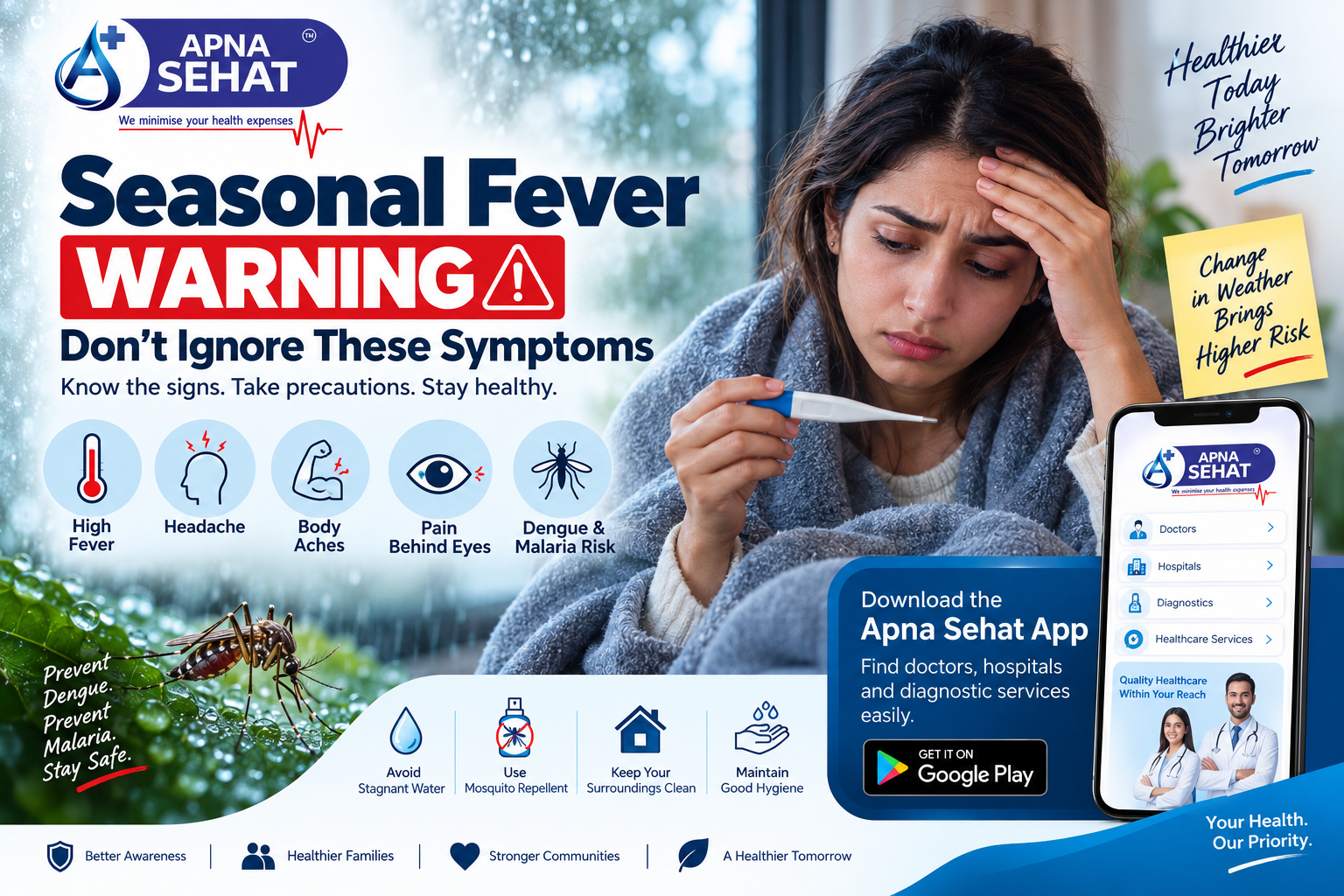
Seasonal Fever Warning: Don’t Ignore These Symptoms
As the weather changes, fever and other infections become common. One day you may feel perfectly fine, and the next you may wake up with a headache, body ache, chills, or a high temperature.
Many people assume it is simply a seasonal viral infection and wait for it to go away. Sometimes that may be true. But during the rainy and humid months, illnesses such as dengue and malaria can also become a concern.
That is why it is important to understand the symptoms and know when a fever needs medical attention.
What Is Seasonal Fever?
“Seasonal fever” is not the name of one particular disease. It is a general term people often use for fever and infections that become more common during certain seasons.
A change in temperature, humidity, water accumulation, mosquitoes, and the spread of infections can all contribute to people falling sick.
Depending on the cause, fever may be accompanied by:
-
Headache
-
Body or muscle pain
-
Chills
-
Weakness and tiredness
-
Loss of appetite
-
Nausea or vomiting
-
Sore throat
-
Cough or cold
-
Dehydration
The important thing is not to assume the cause of the fever without considering the other symptoms.
Why Should You Be Careful During the Rainy Season?
Rainwater can collect in containers, tyres, coolers, flowerpots and other places around homes and workplaces. These areas can become breeding sites for mosquitoes.
Mosquito-borne diseases such as dengue and malaria can initially look like an ordinary fever. This can make it difficult to know the cause without proper medical evaluation.
Dengue may cause sudden high fever, headache, pain behind the eyes, muscle and joint pain, nausea, vomiting and skin rash.
Malaria can also cause fever, headache, vomiting and other flu-like symptoms. In severe cases, malaria can affect vital organs and become life-threatening.
Dengue Warning Signs You Should Never Ignore
Dengue can sometimes begin like an ordinary fever. However, certain symptoms may indicate that the illness is becoming more serious.
Watch out for:
-
Persistent or repeated vomiting
-
Bleeding from the nose or gums
-
Blood in vomit or stool
-
Severe weakness
-
Extreme restlessness or unusual sleepiness
-
Difficulty breathing
-
Signs of dehydration
-
Severe abdominal pain
If any serious warning sign appears, do not wait for the symptoms to become worse. Seek medical attention promptly.
The clinical management guidelines for dengue emphasize monitoring patients carefully, particularly when warning signs develop.
How Can You Reduce the Risk of Seasonal Fever?
You cannot prevent every infection, but a few simple habits can reduce your risk.
1. Avoid Stagnant Water
Check your surroundings regularly for standing water. Empty water from unused containers, flowerpots, tyres and other objects where mosquitoes can breed.
2. Keep Water Containers Covered
If you store water at home, keep the containers properly covered.
3. Keep Coolers Clean
Water stored in air coolers should be emptied and cleaned regularly. Do not allow water to remain stagnant for long periods.
4. Protect Yourself From Mosquitoes
Use mosquito nets, repellents, screens and appropriate clothing, particularly in areas where mosquito activity is high.
Remember that the mosquitoes responsible for dengue can bite during the daytime as well, so mosquito protection should not be limited to nighttime.
5. Maintain Good Hygiene
Wash your hands regularly, drink safe water and maintain cleanliness around your home and workplace.
What Should You Do If You Develop a Fever?
If you develop a fever, give your body enough rest and stay hydrated.
Drink water and other appropriate fluids. Oral rehydration solutions may also be useful when dehydration is a concern.
However, avoid randomly taking antibiotics or other medicines without medical advice.
If dengue is suspected, medication should be taken only according to appropriate medical guidance. The National Guidelines for Clinical Management of Dengue Fever advise avoiding aspirin and NSAIDs because of the risk of bleeding.
When Should You See a Doctor?
A mild fever may sometimes settle with rest and fluids, but medical advice should not be delayed when symptoms are persistent, severe or unusual.
Consider consulting a healthcare professional if:
-
Your fever continues or keeps coming back
-
You have severe weakness
-
You are vomiting repeatedly
-
You have difficulty breathing
-
You notice unusual bleeding
-
You have severe abdominal pain
-
You are unable to drink enough fluids
-
You become unusually sleepy, confused or restless
-
A child or elderly person develops significant symptoms
The earlier the cause of a serious illness is identified, the sooner appropriate care can begin.
Finding the Right Healthcare Support With Apna Sehat
When you or someone in your family develops a fever, finding the right healthcare service can sometimes be stressful.
Apna Sehat is designed to make it easier to explore healthcare services from your phone. The app allows users to discover healthcare options including doctors, hospitals and diagnostic services.
Instead of spending time searching through different sources, you can use Apna Sehat to explore healthcare services when you need them.
Download the Apna Sehat App
Don't wait until you are feeling unwell to start thinking about healthcare options.
Download Apna Sehat and keep access to healthcare services within reach.
Download Apna Sehat from Google Play:
Final Word
Seasonal fever may be common, but it should not always be taken lightly.
A fever accompanied by severe weakness, repeated vomiting, bleeding, breathing difficulty, dehydration or other unusual symptoms needs proper medical attention.
During the rainy season, taking precautions against mosquitoes and maintaining good hygiene can also go a long way toward protecting your family.
Listen to your body, pay attention to warning signs, and seek professional medical advice when needed.
With Apna Sehat, finding healthcare services can be simpler when you need them.
Seasonal Fever Warning: मौसम बदलते ही बढ़ जाता है बुखार का खतरा, इन संकेतों को न करें नजरअंदाज
मौसम बदलते ही घर में किसी न किसी के बीमार पड़ने की चिंता शुरू हो जाती है। कभी अचानक तेज बुखार, कभी सिरदर्द और शरीर में दर्द, तो कभी कमजोरी और उल्टी जैसी परेशानी। कई बार लोग इसे सामान्य वायरल या मौसम का असर मानकर कुछ दिन इंतजार करते रहते हैं।
लेकिन हर बुखार साधारण नहीं होता।
खासकर बारिश और उमस वाले मौसम में डेंगू और मलेरिया जैसी बीमारियों का खतरा बढ़ सकता है। इसलिए बुखार आने पर सिर्फ तापमान कम करना ही जरूरी नहीं है, बल्कि उसके साथ आने वाले दूसरे लक्षणों पर भी ध्यान देना जरूरी है।
भारत के National Centre for Vector Borne Diseases Control (NCVBDC) के अनुसार डेंगू एक mosquito-borne viral disease है और इसके लक्षणों में अचानक तेज बुखार, तेज सिरदर्द, आंखों के पीछे दर्द, मांसपेशियों और जोड़ों में दर्द, भूख कम लगना, nausea और vomiting शामिल हो सकते हैं।
Seasonal Fever क्या है?
“Seasonal fever” कोई एक बीमारी का नाम नहीं है। मौसम के साथ कई तरह के infections और health conditions के कारण बुखार हो सकता है।
बारिश के मौसम में वायरल infections के अलावा dengue और malaria जैसी mosquito-borne diseases भी चिंता का कारण बन सकती हैं।
मलेरिया में आमतौर पर बुखार, सिरदर्द, उल्टी और flu जैसे symptoms दिखाई दे सकते हैं। गंभीर स्थिति में यह बीमारी शरीर के महत्वपूर्ण अंगों को प्रभावित कर सकती है।
इसलिए केवल यह सोच लेना कि “मौसम बदलने की वजह से बुखार है” हमेशा सही नहीं होता।
Seasonal Fever के सामान्य लक्षण क्या हैं?
बुखार के साथ हर व्यक्ति में एक जैसे symptoms नहीं होते। फिर भी कुछ सामान्य लक्षणों पर ध्यान देना चाहिए:
-
शरीर का तापमान बढ़ना
-
ठंड लगना या कंपकंपी
-
सिरदर्द
-
शरीर और मांसपेशियों में दर्द
-
कमजोरी और थकान
-
भूख कम लगना
-
nausea या उल्टी
-
गले में खराश या खांसी
-
शरीर में पानी की कमी महसूस होना
अगर बुखार लगातार बना रहता है, बार-बार वापस आता है या उसके साथ नए और गंभीर लक्षण दिखाई देने लगते हैं, तो डॉक्टर से सलाह लेना बेहतर है।
Dengue के इन Warning Signs को बिल्कुल नजरअंदाज न करें
डेंगू की शुरुआत कई बार सामान्य बुखार जैसी लग सकती है। इसी वजह से इसके warning signs को पहचानना महत्वपूर्ण है।
NCVBDC के अनुसार डेंगू में अचानक तेज बुखार, तेज सिरदर्द, आंखों के पीछे दर्द, muscle और joint pain, rash, nausea और vomiting जैसे symptoms हो सकते हैं।
कुछ गंभीर warning signs में शामिल हैं:
-
बार-बार उल्टी होना
-
उल्टी में खून आना
-
नाक या मसूड़ों से खून आना
-
त्वचा पर bleeding या लाल निशान
-
बहुत ज्यादा नींद या बेचैनी
-
मुंह का सूखना और बहुत ज्यादा प्यास लगना
-
तेज कमजोरी
-
सांस लेने में परेशानी
इनमें से कोई गंभीर लक्षण दिखाई दे तो घर पर इंतजार करने के बजाय तुरंत medical attention लेना चाहिए।
Malaria के लक्षणों को भी समझें
मलेरिया भी mosquito-borne disease है और शुरुआत में इसके symptoms सामान्य flu या fever जैसे दिखाई दे सकते हैं।
आमतौर पर इसके symptoms में:
-
बुखार
-
सिरदर्द
-
उल्टी
-
कमजोरी
-
थकान
शामिल हो सकते हैं।
कुछ मामलों में malaria गंभीर रूप ले सकता है और nervous system सहित शरीर के महत्वपूर्ण अंगों को प्रभावित कर सकता है।
इसलिए लगातार बुखार होने पर खुद से दवा लेते रहने के बजाय medical evaluation कराना जरूरी है।
Seasonal Fever में घर पर क्या सावधानी रखें?
बुखार होने पर आराम करना और शरीर में पर्याप्त fluids बनाए रखना महत्वपूर्ण है। पानी, ORS और डॉक्टर द्वारा सुझाए गए fluids dehydration से बचाने में मदद कर सकते हैं।
लेकिन एक बात विशेष रूप से ध्यान रखें—हर बुखार में अपनी तरफ से antibiotics या दूसरी medicines शुरू करना सही नहीं है।
अगर dengue की संभावना हो तो दवाइयों का चुनाव डॉक्टर की सलाह से करना चाहिए। National Dengue Guidelines में dengue के संदर्भ में aspirin और NSAIDs से बचने की सलाह दी गई है।
बुखार लगातार रहने या हालत बिगड़ने पर medical consultation में देरी न करें।
Dengue और Seasonal Fever से बचने के आसान तरीके
बीमारी होने के बाद इलाज से ज्यादा जरूरी है कि mosquito breeding को रोकने की कोशिश की जाए।
अपने घर और आसपास इन बातों का ध्यान रखें:
1. घर के आसपास पानी जमा न होने दें
पुराने बर्तन, गमले, टायर, पानी के कंटेनर और दूसरे सामान में जमा पानी mosquitoes के breeding का कारण बन सकता है।
2. Cooler की सफाई करें
NCVBDC की सलाह के अनुसार coolers और छोटे containers में जमा पानी को नियमित रूप से हटाना चाहिए।
3. पूरे शरीर को ढकने वाले कपड़े पहनें
खासकर mosquito activity वाले स्थानों पर arms और legs को ढककर रखना मददगार हो सकता है।
4. Mosquito repellent का इस्तेमाल करें
जरूरत के अनुसार mosquito repellent और mosquito nets का इस्तेमाल किया जा सकता है। NCVBDC दिन के समय भी mosquito protection पर ध्यान देने की सलाह देता है, क्योंकि dengue फैलाने वाला Aedes mosquito दिन में भी काट सकता है।
कब डॉक्टर से संपर्क करना चाहिए?
हर बुखार में घबराने की जरूरत नहीं है, लेकिन कुछ situations में medical advice लेने में देरी नहीं करनी चाहिए।
अगर:
-
बुखार तेज है या लगातार बना हुआ है
-
बार-बार उल्टी हो रही है
-
बहुत ज्यादा कमजोरी महसूस हो रही है
-
सांस लेने में परेशानी है
-
bleeding दिखाई दे रही है
-
व्यक्ति बहुत ज्यादा सुस्त या confused लग रहा है
-
पानी पीना मुश्किल हो रहा है
-
बच्चा, बुजुर्ग या गर्भवती महिला बीमार है
-
पहले से कोई गंभीर health condition मौजूद है
तो डॉक्टर से संपर्क करना बेहतर है।
याद रखें: बुखार का कारण जाने बिना केवल temperature कम करना पर्याप्त नहीं हो सकता।
सही समय पर सही Healthcare तक पहुंचना क्यों जरूरी है?
बीमारी के दौरान सबसे बड़ी परेशानी कई बार यह होती है कि डॉक्टर कहां दिखाएं, कौन-सा hospital चुनें या diagnostic test कहां करवाएं।
यहीं Apna Sehat आपकी healthcare journey को आसान बनाने में मदद कर सकता है।
Apna Sehat एक healthcare navigation platform है, जो users को hospitals, clinics और diagnostic centres से जोड़ने के लिए बनाया गया है। इसके जरिए users doctors और specialists को browse करके consultation appointments की जानकारी देख सकते हैं और diagnostic services खोज सकते हैं।
यानी जब seasonal fever के दौरान आपको medical consultation या diagnostic service की जरूरत हो, तो healthcare options खोजने की प्रक्रिया को एक जगह से manage करना आसान हो सकता है।
Apna Sehat App डाउनलोड करें
स्वास्थ्य से जुड़ी जरूरत के समय सही healthcare provider तक पहुंचना आसान बनाने के लिए Apna Sehat App डाउनलोड करें।
???? Apna Sehat – Google Play Store पर डाउनलोड करें:
Download Apna Sehat App
Apna Sehat के जरिए आप healthcare services को एक जगह से explore कर सकते हैं, जिसमें doctor consultation, hospitals और diagnostic services जैसी सुविधाएं शामिल हैं।
आखिर में एक जरूरी बात
मौसम बदलने के साथ बुखार होना आम बात लग सकती है, लेकिन हर बुखार को सिर्फ “seasonal fever” मान लेना सही नहीं है।
खासकर dengue और malaria जैसी बीमारियों के शुरुआती symptoms सामान्य fever जैसे दिखाई दे सकते हैं। इसलिए तेज या लगातार बुखार के साथ अगर unusual symptoms दिखाई दें, तो समय पर डॉक्टर से सलाह लें।
अपनी सेहत को लेकर अनुमान लगाने के बजाय सही समय पर सही healthcare तक पहुंचना ज्यादा समझदारी है।
आज ही Apna Sehat App डाउनलोड करें और जरूरत पड़ने पर डॉक्टर, hospital और diagnostic services खोजने का आसान तरीका अपने फोन में रखें।