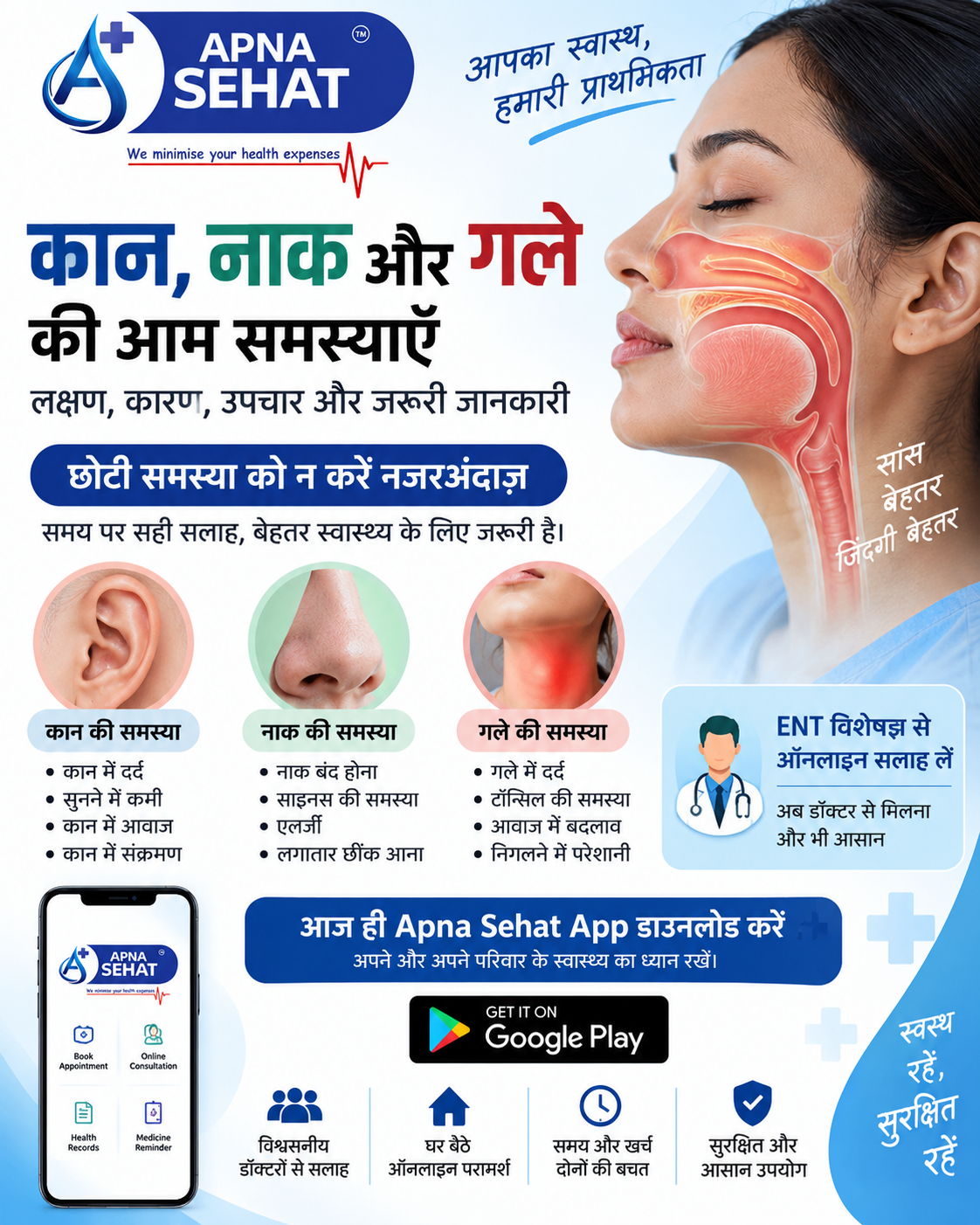
ENT Problems: Common Ear, Nose and Throat Problems, Symptoms, Causes and Treatment
Our ears, nose and throat play an important role in everyday life. We use our ears to hear, our nose to breathe and smell, and our throat to swallow and communicate. Because these areas are closely connected, a problem in one part can sometimes affect another.
A blocked nose, repeated throat infection, ear pain, ringing in the ears, sinus problems or difficulty hearing may seem like minor issues. However, when these symptoms continue or keep coming back, they should not be ignored.
An ENT specialist, also called an otolaryngologist, diagnoses and treats problems related to the ear, nose and throat.
In this guide, let us understand some of the most common ENT problems, their symptoms, possible causes, treatment approaches and when you should consult a doctor.
What Does ENT Mean?
ENT stands for Ear, Nose and Throat.
An ENT specialist deals with conditions affecting:
-
Ear and hearing
-
Nose and nasal passages
-
Sinuses
-
Throat
-
Tonsils and adenoids
-
Voice and swallowing
-
Balance-related ear problems
-
Some conditions affecting the head and neck
ENT problems can occur in children, adults and older people. Some conditions are temporary, while others may require long-term treatment or specialist care.
Common ENT Problems
1. Ear Infection
An ear infection can occur in different parts of the ear. It may cause pain, a feeling of pressure, reduced hearing or discharge from the ear.
Ear infections are particularly common in children, although adults can also develop them.
Common symptoms
-
Ear pain
-
Feeling of fullness in the ear
-
Difficulty hearing
-
Fever
-
Irritability in children
-
Fluid or pus coming from the ear
-
Ringing or unusual sounds in the ear
Ear infections may occur after a cold, flu or other infection. Some ear infections get better with appropriate care, while others need medical treatment.
Important: Ear discharge should not be ignored. WHO recommends medical evaluation when there is ear pain, discharge or difficulty hearing.
What is the solution?
Treatment depends on the cause and severity. A doctor may examine the ear and decide whether observation, medicines, ear drops or other treatment is necessary.
Do not put oil, home remedies or unprescribed medicines inside an infected or painful ear.
2. Excessive Earwax
Earwax is normal and actually protects the ear canal. However, excessive or impacted wax can sometimes block the ear canal.
Symptoms may include:
-
Reduced hearing
-
Ear fullness
-
Earache
-
Itching
-
Ringing in the ear
Many people try to remove earwax using cotton buds, matchsticks or other objects. This can push wax deeper into the ear and may injure the ear canal or eardrum.
WHO advises against putting cotton buds, oil, sticks or other objects inside the ear.
What is the solution?
If earwax is causing hearing problems or discomfort, a healthcare professional can determine whether it needs to be removed safely.
3. Hearing Loss
Hearing loss can happen at any age. It may develop gradually or, in some cases, suddenly.
Common causes include ageing, prolonged exposure to loud sounds, ear infections, earwax blockage, certain medicines and other medical conditions.
Possible warning signs
-
Frequently asking people to repeat themselves
-
Increasing the television volume
-
Difficulty understanding conversations in noisy places
-
Trouble hearing on the phone
-
Speaking louder than usual
-
Difficulty hearing alarms or doorbells
-
Ringing in the ears
Early evaluation is important because some causes of hearing loss can be treated or managed more effectively when identified early.
What is the solution?
A doctor may examine the ears and recommend a hearing assessment. Depending on the cause, treatment may include treating an infection or blockage, hearing rehabilitation, hearing aids or other appropriate interventions.
4. Tinnitus – Ringing or Buzzing in the Ear
Have you ever heard ringing, buzzing, humming or another sound when there is no external source?
This is called tinnitus.
Tinnitus can be associated with hearing loss, loud-noise exposure, ear infections, earwax buildup, certain medicines and other conditions.
When should you consult a doctor?
Do not ignore tinnitus if:
-
It starts suddenly
-
It occurs with hearing loss
-
It is accompanied by dizziness
-
There is ear pain
-
It continues for a long time
-
It is affecting your sleep or daily life
Sudden tinnitus accompanied by hearing loss or dizziness requires prompt medical evaluation.
5. Sinusitis
Sinusitis occurs when the lining of the sinuses becomes swollen. It commonly develops following a cold or flu and can also be associated with allergies.
Common symptoms include:
-
Blocked nose
-
Runny nose
-
Facial pain or pressure
-
Headache
-
Reduced sense of smell
-
Thick or coloured nasal mucus
-
Bad breath
-
Cough
-
Pressure in the ears
Most uncomplicated cases improve with time, but persistent or recurrent symptoms may require medical evaluation.
What is the solution?
Depending on the cause, treatment may involve:
-
Adequate rest
-
Fluids
-
Saline nasal rinsing
-
Avoiding allergy triggers
-
Appropriate medicines recommended by a healthcare professional
-
Nasal sprays when medically advised
Antibiotics are not automatically required for sinusitis because many cases are caused by viruses.
If sinus problems continue for months or repeatedly return, an ENT specialist may need to investigate the underlying cause.
6. Allergic Rhinitis
Some people experience repeated sneezing, a runny nose and nasal blockage when exposed to dust, pollen, pollution, pet dander or other allergens.
This condition is commonly known as allergic rhinitis.
Common symptoms
-
Frequent sneezing
-
Runny nose
-
Blocked nose
-
Itchy nose
-
Watery or itchy eyes
-
Post-nasal drip
What can help?
Identifying and avoiding triggers is an important part of managing allergies. Depending on the symptoms, a doctor may recommend medicines or nasal treatment.
If nasal allergies are affecting sleep, work, studies or everyday activities, consider consulting a healthcare professional.
7. Deviated Nasal Septum
The septum is the structure separating the two sides of the nose. When it is significantly deviated, one side of the nose may become more difficult to breathe through.
Possible symptoms
-
Difficulty breathing through the nose
-
One-sided nasal blockage
-
Frequent nasal congestion
-
Snoring
-
Repeated sinus problems
-
Nosebleeds in some people
A mildly deviated septum may cause no symptoms. Treatment depends on how severely it affects breathing and quality of life.
An ENT specialist can examine the nose and determine the appropriate treatment.
8. Tonsillitis
The tonsils are located at the back of the throat. Infection or inflammation of the tonsils is called tonsillitis.
It is common among children but can also affect teenagers and adults.
Symptoms can include:
-
Sore throat
-
Difficulty swallowing
-
Fever
-
Red or swollen tonsils
-
White patches on the tonsils
-
Swollen glands in the neck
-
Bad breath
-
Earache
-
Tiredness
Tonsillitis may be caused by viral or bacterial infections. The appropriate treatment depends on the cause.
When should you seek medical help?
Consult a doctor if symptoms are severe, keep returning, or make swallowing or breathing difficult.
9. Sore Throat
A sore throat is one of the most common complaints associated with ENT health.
It may occur because of:
-
Viral infections
-
Bacterial infections
-
Allergies
-
Dry air
-
Smoke or pollution
-
Acid reflux
-
Excessive voice use
A sore throat that lasts longer than expected, repeatedly returns or is associated with serious symptoms should be evaluated by a doctor.
10. Hoarseness and Voice Problems
A change in voice can happen after shouting, excessive speaking, a throat infection or irritation.
However, persistent hoarseness should not simply be ignored.
Possible causes include:
-
Laryngitis
-
Voice overuse
-
Smoking
-
Acid reflux
-
Vocal cord problems
-
Other throat or voice-box conditions
If your voice remains hoarse for a prolonged period or you have difficulty swallowing or breathing, seek medical evaluation.
11. Snoring and Sleep-Related Breathing Problems
Snoring is common, but loud and persistent snoring may sometimes be associated with a sleep-related breathing problem.
Possible warning signs
-
Very loud snoring
-
Pauses in breathing during sleep
-
Waking up gasping
-
Morning headaches
-
Excessive daytime sleepiness
-
Difficulty concentrating
An ENT specialist or sleep specialist may help identify the underlying cause.
12. Dizziness and Balance Problems
The inner ear plays an important role in maintaining balance. Problems involving the inner ear can sometimes cause dizziness or vertigo.
Symptoms may include:
-
Spinning sensation
-
Unsteadiness
-
Nausea
-
Ringing in the ear
-
Hearing changes
Persistent dizziness, especially when accompanied by hearing loss or other neurological symptoms, requires medical assessment.
WHO notes that persistent tinnitus or dizziness can indicate an ear-related problem and may require specialist referral.
How Can You Protect Your ENT Health?
Many everyday habits can help reduce the risk of ENT problems.
Protect your ears
Avoid prolonged exposure to loud music and noisy environments. Use suitable hearing protection when working around loud machinery.
Avoid putting objects inside your ears
Do not use cotton buds, pins, matchsticks or other objects to clean inside your ears. The ear is largely self-cleaning.
Take nasal symptoms seriously
If nasal blockage, sinus symptoms or allergies keep returning, discuss them with a doctor instead of repeatedly self-medicating.
Maintain good hygiene
Wash your hands regularly and follow respiratory hygiene practices to reduce the spread of infections.
Avoid smoking
Smoking can irritate the respiratory system and may worsen several nose and throat problems.
Don't ignore hearing changes
If you notice reduced hearing, persistent ringing or repeated ear infections, arrange a professional evaluation.
When Should You See an ENT Specialist?
You should consider consulting an ENT specialist if you experience:
-
Persistent ear pain
-
Ear discharge
-
Sudden or progressive hearing loss
-
Persistent ringing in the ears
-
Repeated ear infections
-
Chronic nasal blockage
-
Recurrent sinus infections
-
Difficulty breathing through the nose
-
Repeated tonsillitis
-
Persistent sore throat
-
Long-lasting hoarseness
-
Difficulty swallowing
-
Persistent dizziness or vertigo
-
Loud snoring with breathing interruptions
Sudden hearing loss, severe breathing difficulty, significant bleeding, severe swelling or other emergency symptoms require urgent medical attention.
Don't Ignore Small ENT Symptoms
An occasional blocked nose or sore throat may not be serious. But when symptoms become frequent, severe or persistent, finding the underlying cause is important.
Early medical evaluation can help identify problems such as infections, hearing loss, chronic sinus disease, allergies or other ENT conditions and guide appropriate treatment.
Instead of relying on random online advice or self-medicating, speak with a qualified healthcare professional who can evaluate your symptoms properly.
Consult a Doctor Through Apna Sehat
Healthcare should be easier to access when you need it.
With Apna Sehat, you can use your smartphone to access healthcare services and take the next step toward professional medical advice.
Whether you are dealing with ear pain, hearing difficulties, sinus problems, recurring throat infections or another health concern, don't ignore persistent symptoms.
Take care of your health. Get the right medical guidance at the right time.
Download the Apna Sehat App
Download Apna Sehat on Google Play
Apna Sehat – Healthcare at your fingertips.
Frequently Asked Questions About ENT Problems
What is an ENT problem?
ENT problems are medical conditions affecting the ear, nose and throat. They can include ear infections, hearing loss, tinnitus, sinusitis, allergies, tonsillitis, throat infections, voice problems and balance disorders.
When should I visit an ENT doctor?
You should consider seeing an ENT specialist when ear, nose or throat symptoms are persistent, severe, recurrent or affecting your daily life. Sudden hearing loss or serious breathing problems require prompt medical attention.
Is earwax harmful?
Earwax is normally useful and protects the ear. It generally does not need to be removed unless it causes symptoms such as hearing loss or discomfort. WHO recommends having problematic earwax removed by a trained healthcare professional.
Can sinusitis go away on its own?
Many uncomplicated cases of sinusitis improve without antibiotics. However, persistent, recurrent or severe symptoms should be evaluated by a healthcare professional.
Is ringing in the ear normal?
Occasional tinnitus can have several causes, but persistent or sudden tinnitus—particularly when accompanied by hearing loss, dizziness or pain—should be evaluated by a doctor.
Can hearing loss be prevented?
Some types of hearing loss can be prevented. Protecting your ears from loud sounds, managing ear infections appropriately and seeking timely medical care can help reduce preventable hearing problems.
Final Word
Your ears, nose and throat affect some of the most basic parts of everyday life—hearing, breathing, speaking, sleeping and swallowing.
Don't wait until a small problem becomes a bigger one. If an ENT symptom continues, keeps coming back or suddenly becomes severe, seek professional medical advice.
Download Apna Sehat today and take a simple step toward better access to healthcare.
ENT की समस्याएँ: कान, नाक और गले की आम बीमारियाँ, लक्षण और उपचार
कान, नाक और गला हमारे शरीर के बेहद महत्वपूर्ण अंग हैं। कान हमें सुनने में मदद करते हैं, नाक सांस लेने और सूंघने का काम करती है, जबकि गला हमें बोलने और भोजन निगलने में सहायता करता है। इन तीनों अंगों में किसी भी तरह की परेशानी हमारे रोजमर्रा के जीवन को प्रभावित कर सकती है।
कान में दर्द, सुनाई कम देना, कान में सीटी या घंटी जैसी आवाज आना, नाक बंद रहना, बार-बार छींक आना, साइनस की समस्या, गले में दर्द या बार-बार टॉन्सिल होने जैसी समस्याएँ काफी आम हैं।
इन समस्याओं की जांच और उपचार करने वाले डॉक्टर को ENT Specialist (ईएनटी विशेषज्ञ) कहा जाता है।
इस लेख में हम जानेंगे कि ENT से जुड़ी आम समस्याएँ कौन-कौन सी हैं, उनके लक्षण क्या हैं, उनके संभावित कारण क्या हो सकते हैं और कब डॉक्टर से सलाह लेना जरूरी है।
ENT क्या होता है?
ENT का पूरा नाम Ear, Nose and Throat यानी कान, नाक और गला है।
ENT विशेषज्ञ निम्नलिखित समस्याओं की जांच और उपचार करते हैं:
-
कान का संक्रमण
-
कान में दर्द
-
सुनने में कमी
-
कान में घंटी या सीटी जैसी आवाज
-
कान में अधिक मैल जमा होना
-
नाक बंद होना
-
एलर्जी और बार-बार छींक आना
-
साइनस की समस्या
-
नाक की हड्डी का टेढ़ा होना
-
गले में संक्रमण
-
टॉन्सिल की समस्या
-
आवाज में बदलाव
-
निगलने में परेशानी
-
खर्राटे और नींद से जुड़ी सांस की समस्या
-
चक्कर और संतुलन से जुड़ी कुछ समस्याएँ
ENT की समस्याएँ बच्चों, युवाओं, वयस्कों और बुजुर्गों—किसी को भी हो सकती हैं।
1. कान का संक्रमण
कान में संक्रमण होने पर दर्द, भारीपन, सुनाई कम देना या कान से तरल पदार्थ निकलना जैसी समस्याएँ हो सकती हैं। बच्चों में कान का संक्रमण अधिक देखने को मिलता है, लेकिन वयस्क भी इससे प्रभावित हो सकते हैं।
कान के संक्रमण के सामान्य लक्षण
-
कान में दर्द
-
कान भारी या बंद महसूस होना
-
सुनाई कम देना
-
बुखार
-
कान से पानी या पस निकलना
-
कान में आवाज आना
-
बच्चों में चिड़चिड़ापन
कई बार सर्दी-जुकाम या अन्य संक्रमण के बाद भी कान में समस्या शुरू हो सकती है।
इसका समाधान क्या है?
कान के संक्रमण का उपचार उसके कारण और गंभीरता पर निर्भर करता है। डॉक्टर कान की जांच करने के बाद आवश्यक दवा या अन्य उपचार की सलाह दे सकते हैं।
कान में बिना डॉक्टर की सलाह के तेल, घरेलू नुस्खे या कोई दवा डालने से बचें।
अगर कान से लगातार पानी या पस निकल रहा है, दर्द ज्यादा है या सुनने में कमी हो रही है, तो ENT डॉक्टर से सलाह लेना बेहतर है।
2. कान में मैल जमा होना
कान का मैल यानी Earwax सामान्य रूप से शरीर की सुरक्षा व्यवस्था का हिस्सा है। यह कान की नली को धूल और अन्य बाहरी चीजों से बचाने में मदद करता है।
लेकिन कभी-कभी बहुत अधिक मैल जमा होकर कान को बंद कर सकता है।
इसके लक्षण
-
सुनाई कम देना
-
कान बंद या भारी लगना
-
कान में दर्द या असहजता
-
कान में खुजली
-
कान में आवाज आना
कई लोग कान साफ करने के लिए कॉटन बड, पिन, माचिस की तीली या अन्य वस्तुओं का इस्तेमाल करते हैं। इससे मैल और अंदर जा सकता है और कान को नुकसान पहुंच सकता है।
क्या करें?
अगर कान का मैल सुनने या आराम में परेशानी पैदा कर रहा है, तो डॉक्टर से जांच करवाएँ। जरूरत पड़ने पर डॉक्टर सुरक्षित तरीके से इसे निकाल सकते हैं।
कान के अंदर कोई नुकीली वस्तु न डालें।
3. सुनने में कमी या Hearing Loss
उम्र बढ़ने, तेज आवाज के लंबे समय तक संपर्क, कान के संक्रमण, कान में मैल जमा होने और अन्य कारणों से सुनने की क्षमता प्रभावित हो सकती है।
कभी-कभी सुनने की समस्या धीरे-धीरे बढ़ती है, इसलिए व्यक्ति को शुरुआत में इसका पता भी नहीं चलता।
सुनने की क्षमता कम होने के संकेत
-
लोगों से बार-बार बात दोहराने के लिए कहना
-
टीवी या मोबाइल की आवाज बहुत तेज रखना
-
भीड़ में बातचीत समझने में परेशानी
-
फोन पर बात सुनने में दिक्कत
-
दूसरों की तुलना में तेज आवाज में बोलना
-
घंटी या अलार्म सुनने में परेशानी
समाधान
सुनने में परेशानी होने पर ENT विशेषज्ञ या ऑडियोलॉजिस्ट से जांच कराना चाहिए। डॉक्टर जरूरत के अनुसार कान की जांच और Hearing Test कराने की सलाह दे सकते हैं।
समय पर जांच कराने से समस्या का कारण पता लगाने और उचित उपचार या प्रबंधन करने में मदद मिल सकती है।
4. कान में सीटी या घंटी जैसी आवाज – Tinnitus
कभी-कभी व्यक्ति को बिना किसी बाहरी आवाज के कान में घंटी, सीटी, भनभनाहट या अन्य आवाज सुनाई देती है। इसे Tinnitus कहा जाता है।
इसके कई संभावित कारण हो सकते हैं, जैसे:
-
तेज आवाज के संपर्क में रहना
-
सुनने की क्षमता में कमी
-
कान में मैल
-
कान का संक्रमण
-
कुछ दवाओं का प्रभाव
-
कान से जुड़ी अन्य समस्याएँ
कब डॉक्टर से मिलना चाहिए?
अगर कान में आवाज:
-
लगातार बनी रहती है
-
अचानक शुरू हुई है
-
सुनने की क्षमता कम होने के साथ हो
-
चक्कर के साथ हो
-
कान में दर्द के साथ हो
-
नींद या रोजमर्रा की जिंदगी को प्रभावित कर रही हो
तो डॉक्टर से जांच करवाना जरूरी है।
5. साइनस की समस्या – Sinusitis
साइनस हमारी नाक के आसपास मौजूद हवा से भरी जगहें होती हैं। इनमें सूजन होने पर Sinusitis की समस्या हो सकती है।
सर्दी-जुकाम या एलर्जी के बाद भी साइनस की समस्या हो सकती है।
सामान्य लक्षण
-
नाक बंद होना
-
नाक से पानी या गाढ़ा म्यूकस आना
-
चेहरे में दर्द या दबाव
-
सिरदर्द
-
सूंघने की क्षमता कम होना
-
गले में म्यूकस गिरना
-
खांसी
-
सांस लेने में परेशानी
-
मुंह से दुर्गंध आना
साइनस की समस्या में क्या करें?
पर्याप्त आराम और पानी पीना मददगार हो सकता है। कुछ लोगों में डॉक्टर की सलाह के अनुसार Saline Nasal Rinse या अन्य उपचार उपयोगी हो सकते हैं।
हर साइनस संक्रमण में Antibiotics की आवश्यकता नहीं होती। इसलिए बिना डॉक्टर की सलाह के Antibiotics लेना उचित नहीं है।
अगर नाक बंद रहने या चेहरे में दर्द की समस्या लंबे समय तक रहती है या बार-बार होती है, तो ENT डॉक्टर से जांच करवाएँ।
6. एलर्जी और Allergic Rhinitis
अगर धूल, परागकण, प्रदूषण, पालतू जानवरों या किसी अन्य चीज के संपर्क में आने के बाद बार-बार छींक आती है और नाक बहती या बंद होती है, तो यह एलर्जी से जुड़ी समस्या हो सकती है।
इसके सामान्य लक्षण
-
बार-बार छींक आना
-
नाक से पानी आना
-
नाक बंद होना
-
नाक में खुजली
-
आंखों में पानी आना
-
आंखों में खुजली
-
गले में म्यूकस गिरना
समाधान
सबसे पहले यह पता लगाना जरूरी है कि एलर्जी किस चीज से हो रही है। डॉक्टर आपकी स्थिति के अनुसार दवा या अन्य उपचार की सलाह दे सकते हैं।
अगर एलर्जी के कारण आपकी नींद, काम या पढ़ाई प्रभावित हो रही है, तो इसे नजरअंदाज न करें।
7. नाक की हड्डी का टेढ़ा होना – Deviated Septum
नाक के बीच में एक संरचना होती है जिसे Nasal Septum कहा जाता है। कुछ लोगों में यह एक तरफ ज्यादा मुड़ी हुई होती है।
अगर यह ज्यादा टेढ़ी हो, तो नाक से सांस लेने में परेशानी हो सकती है।
संभावित लक्षण
-
एक तरफ नाक हमेशा बंद रहना
-
नाक से सांस लेने में परेशानी
-
बार-बार नाक बंद होना
-
खर्राटे
-
बार-बार साइनस की समस्या
-
कुछ मामलों में नाक से खून आना
हर टेढ़े Septum में उपचार की जरूरत नहीं होती। अगर इससे सांस लेने में समस्या हो रही है, तो ENT विशेषज्ञ जांच करके उचित विकल्प बता सकते हैं।
8. टॉन्सिल की समस्या – Tonsillitis
गले के पीछे दोनों तरफ मौजूद छोटे ऊतक Tonsils कहलाते हैं। इनमें संक्रमण या सूजन होने को Tonsillitis कहा जाता है।
यह समस्या बच्चों में काफी सामान्य है, लेकिन वयस्कों को भी हो सकती है।
टॉन्सिल के लक्षण
-
गले में दर्द
-
निगलने में परेशानी
-
बुखार
-
टॉन्सिल में सूजन
-
टॉन्सिल पर सफेद धब्बे
-
गर्दन की ग्रंथियों में सूजन
-
मुंह से दुर्गंध
-
कमजोरी
टॉन्सिल का संक्रमण वायरस या बैक्टीरिया के कारण हो सकता है। इसलिए उपचार कारण के अनुसार किया जाता है।
अगर टॉन्सिल बार-बार हो रहे हैं या निगलने और सांस लेने में परेशानी हो रही है, तो डॉक्टर से जांच करवाएँ।
9. गले में दर्द और संक्रमण
गले में दर्द एक बहुत सामान्य समस्या है। यह कई कारणों से हो सकता है।
इसके संभावित कारणों में शामिल हैं:
-
वायरल संक्रमण
-
बैक्टीरियल संक्रमण
-
एलर्जी
-
धूल और प्रदूषण
-
धूम्रपान
-
बहुत अधिक बोलना या चिल्लाना
-
गले में सूखापन
-
Acid Reflux
अधिकांश सामान्य गले के संक्रमण कुछ समय में ठीक हो सकते हैं। लेकिन अगर गले का दर्द लंबे समय तक बना रहता है, बार-बार होता है या निगलने और सांस लेने में समस्या पैदा करता है, तो डॉक्टर से संपर्क करें।
10. आवाज में बदलाव और गला बैठना
बहुत ज्यादा बोलने, चिल्लाने, संक्रमण या गले में जलन के कारण आवाज बैठ सकती है।
लेकिन अगर आवाज लंबे समय तक सामान्य नहीं हो रही है, तो इसके पीछे कोई अन्य कारण भी हो सकता है।
संभावित कारण
-
Laryngitis
-
आवाज का अधिक इस्तेमाल
-
धूम्रपान
-
Acid Reflux
-
Vocal Cord से जुड़ी समस्या
-
गले या Voice Box से संबंधित अन्य समस्याएँ
अगर आवाज लंबे समय तक बैठी रहती है या इसके साथ निगलने या सांस लेने में परेशानी है, तो ENT विशेषज्ञ से सलाह लेना जरूरी है।
11. खर्राटे और नींद में सांस की समस्या
खर्राटे कई लोगों को आते हैं और हर बार यह गंभीर समस्या नहीं होती। लेकिन बहुत तेज और लगातार खर्राटे कभी-कभी Sleep Apnea जैसी समस्या से जुड़े हो सकते हैं।
ध्यान देने वाले संकेत
-
बहुत तेज खर्राटे
-
सोते समय सांस रुकना
-
नींद में हांफना या अचानक सांस लेने के लिए उठना
-
सुबह सिरदर्द
-
दिन में बहुत अधिक नींद आना
-
थकान
-
ध्यान लगाने में परेशानी
ऐसे लक्षण होने पर डॉक्टर से जांच करवाना उचित है।
12. कान से जुड़ा चक्कर और Balance Problem
हमारे कान का अंदरूनी हिस्सा शरीर का संतुलन बनाए रखने में महत्वपूर्ण भूमिका निभाता है।
कान से जुड़ी कुछ समस्याओं में चक्कर या Vertigo महसूस हो सकता है।
इसके लक्षण
-
कमरे के घूमने जैसा महसूस होना
-
चलने में असंतुलन
-
चक्कर
-
मतली
-
कान में आवाज
-
सुनने में बदलाव
अगर चक्कर बार-बार आते हैं या उनके साथ सुनने की समस्या, कान में आवाज या अन्य गंभीर लक्षण दिखाई देते हैं, तो डॉक्टर से जांच करवाना चाहिए।
ENT समस्याओं से बचने के लिए क्या करें?
ENT स्वास्थ्य को बेहतर रखने के लिए कुछ आसान आदतें अपनाई जा सकती हैं।
1. कान को तेज आवाज से बचाएँ
बहुत तेज संगीत या लगातार तेज आवाज के संपर्क में रहने से बचें। जरूरत पड़ने पर उचित Hearing Protection का इस्तेमाल करें।
2. कान के अंदर चीजें न डालें
कॉटन बड, पिन, माचिस की तीली या किसी अन्य वस्तु से कान साफ करने की कोशिश न करें।
3. धूम्रपान से बचें
धूम्रपान गले और सांस से संबंधित समस्याओं को बढ़ा सकता है।
4. एलर्जी के कारणों से बचें
अगर आपको धूल या प्रदूषण से एलर्जी है, तो जितना संभव हो उससे बचने की कोशिश करें।
5. बार-बार होने वाली समस्या को नजरअंदाज न करें
अगर आपको हर कुछ समय में कान का संक्रमण, साइनस, गले का संक्रमण या अन्य ENT समस्या होती है, तो सिर्फ दवा लेकर समस्या को दबाने के बजाय डॉक्टर से कारण की जांच करवाएँ।
6. बिना डॉक्टर की सलाह दवा न लें
विशेष रूप से Antibiotics और अन्य Prescription Medicines का इस्तेमाल डॉक्टर की सलाह के अनुसार ही करें।
ENT डॉक्टर से कब मिलना चाहिए?
निम्नलिखित समस्याओं में डॉक्टर से सलाह लेना उचित है:
-
लगातार कान दर्द
-
कान से पानी या पस निकलना
-
अचानक सुनाई कम देना
-
धीरे-धीरे सुनने की क्षमता कम होना
-
कान में लगातार घंटी या सीटी बजना
-
बार-बार कान का संक्रमण
-
लंबे समय तक नाक बंद रहना
-
बार-बार साइनस की समस्या
-
लगातार गले में दर्द
-
बार-बार टॉन्सिल होना
-
लंबे समय तक आवाज बैठना
-
निगलने में परेशानी
-
लगातार चक्कर आना
-
बहुत तेज खर्राटे और नींद में सांस रुकना
अचानक सुनाई देना बंद होना, सांस लेने में गंभीर परेशानी, अत्यधिक सूजन या गंभीर रक्तस्राव जैसी स्थिति में तुरंत चिकित्सा सहायता लें।
ENT समस्या में खुद से इलाज क्यों नहीं करना चाहिए?
इंटरनेट पर किसी लक्षण को देखकर खुद से दवा लेना आसान लगता है, लेकिन एक ही लक्षण के कई अलग-अलग कारण हो सकते हैं।
उदाहरण के लिए, कान में दर्द संक्रमण, मैल, चोट या किसी अन्य समस्या के कारण हो सकता है। इसी तरह नाक बंद होने का कारण सामान्य सर्दी, एलर्जी, साइनस या नाक की संरचना से जुड़ी समस्या हो सकती है।
इसलिए सही कारण जानने के लिए डॉक्टर की जांच जरूरी है।
Apna Sehat के साथ स्वास्थ्य सलाह तक आसान पहुंच
आज के समय में डॉक्टर से सलाह लेने के लिए हर बार अस्पताल या क्लिनिक जाना संभव नहीं होता।
Apna Sehat App आपको अपने स्वास्थ्य से जुड़ी जानकारी और मेडिकल सेवाओं तक आसान पहुंच देने के उद्देश्य से बनाया गया है।
अगर आपको कान, नाक, गले या किसी अन्य स्वास्थ्य समस्या से संबंधित परेशानी है, तो लक्षणों को लंबे समय तक नजरअंदाज न करें और उचित चिकित्सा सलाह लें।
आज ही Apna Sehat App डाउनलोड करें
???? Apna Sehat App Google Play Store पर उपलब्ध है।
Google Play Store से Apna Sehat App डाउनलोड करें
Apna Sehat – बेहतर स्वास्थ्य की ओर एक आसान कदम।
अक्सर पूछे जाने वाले सवाल – ENT Problems FAQ
ENT समस्या क्या होती है?
ENT समस्या का संबंध कान, नाक और गले से होता है। इसमें कान का संक्रमण, सुनने में कमी, टिनिटस, साइनस, एलर्जी, टॉन्सिल, गले का संक्रमण और आवाज से जुड़ी समस्याएँ शामिल हो सकती हैं।
ENT डॉक्टर क्या करते हैं?
ENT डॉक्टर कान, नाक और गले से जुड़ी समस्याओं की जांच, निदान और उपचार करते हैं।
कान में दर्द होने पर क्या करें?
कान में किसी भी वस्तु को डालने या बिना सलाह के दवा डालने से बचें। अगर दर्द ज्यादा है, बार-बार हो रहा है या कान से तरल पदार्थ निकल रहा है, तो डॉक्टर से जांच करवाएँ।
क्या कान का मैल खुद निकालना चाहिए?
कान का सामान्य मैल शरीर की प्राकृतिक सुरक्षा का हिस्सा है। अगर मैल के कारण सुनने में परेशानी या अन्य लक्षण हो रहे हैं, तो डॉक्टर से सुरक्षित तरीके से इसे हटवाना बेहतर है।
साइनस की समस्या के सामान्य लक्षण क्या हैं?
नाक बंद होना, चेहरे में दबाव या दर्द, सिरदर्द, नाक से म्यूकस आना और सूंघने की क्षमता कम होना साइनस से जुड़े सामान्य लक्षण हो सकते हैं।
कान में सीटी या घंटी क्यों बजती है?
कान में घंटी, सीटी या भनभनाहट जैसी आवाज को Tinnitus कहा जाता है। इसके कई कारण हो सकते हैं। अगर यह लगातार रहती है या सुनने में कमी के साथ होती है, तो डॉक्टर से जांच करवानी चाहिए।
गले में बार-बार दर्द क्यों होता है?
गले में बार-बार दर्द संक्रमण, एलर्जी, प्रदूषण, धूम्रपान, Acid Reflux या अन्य कारणों से हो सकता है। बार-बार होने पर डॉक्टर से कारण की जांच करवाना उचित है।
ENT समस्या के लिए डॉक्टर से कब मिलना चाहिए?
अगर लक्षण लगातार बने रहें, बार-बार वापस आएँ, रोजमर्रा की जिंदगी को प्रभावित करें या अचानक गंभीर हो जाएँ, तो ENT विशेषज्ञ से सलाह लेना चाहिए।
निष्कर्ष
कान, नाक और गले की समस्याएँ आम जरूर हैं, लेकिन उन्हें हमेशा नजरअंदाज करना सही नहीं है। कान में लगातार दर्द, सुनने में कमी, कान में आवाज, लंबे समय तक नाक बंद रहना, बार-बार साइनस या टॉन्सिल की समस्या और लगातार गले में दर्द जैसे लक्षणों के पीछे अलग-अलग कारण हो सकते हैं।
सही समय पर डॉक्टर से सलाह लेने से समस्या का कारण समझने और उचित उपचार लेने में मदद मिल सकती है।
अपने स्वास्थ्य को लेकर लापरवाही न करें। सही जानकारी लें, जरूरत पड़ने पर डॉक्टर से सलाह लें और अपने स्वास्थ्य का ध्यान रखें।
???? Apna Sehat App डाउनलोड करें
स्वास्थ्य संबंधी सेवाओं और डॉक्टर से जुड़ी सहायता तक आसान पहुंच के लिए आज ही Apna Sehat App डाउनलोड करें।
???? Google Play Store से Apna Sehat डाउनलोड करें
Apna Sehat – आपका स्वास्थ्य, आपकी प्राथमिकता।