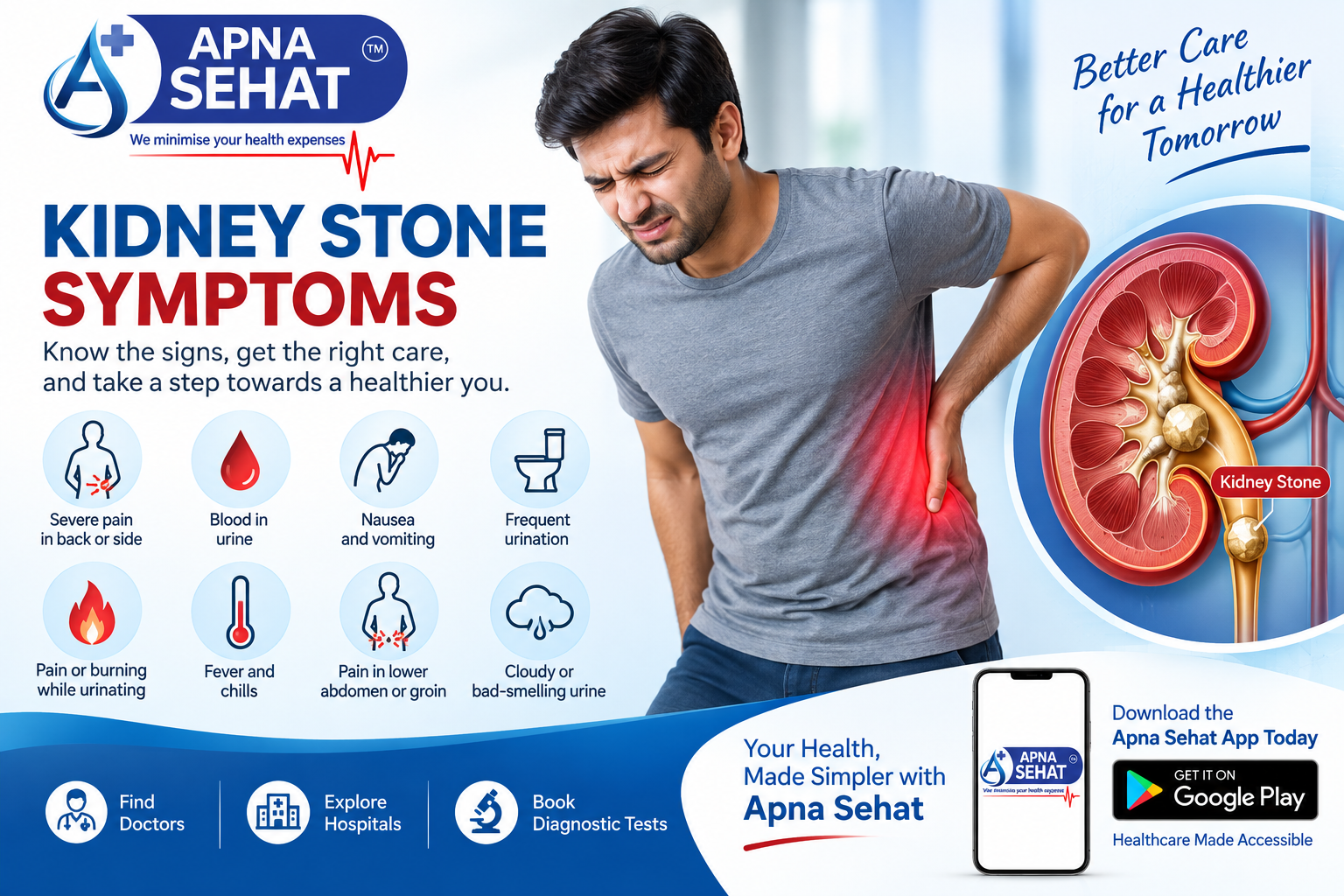
Kidney Stone Symptoms: 10 Signs You Should Not Ignore
Kidney stones can start quietly. A small stone may pass through the urinary system without causing noticeable symptoms. But when a stone moves into the ureter—the narrow tube that carries urine from the kidney to the bladder—it can cause sudden and severe discomfort.
Many people first notice a kidney stone because of sharp pain in the back, side, lower abdomen or groin. Other symptoms can include changes in urine, pain while urinating, nausea, vomiting and, in some cases, fever or chills.
Knowing the early signs can help you decide when it is time to consult a doctor.
What Is a Kidney Stone?
A kidney stone is a hard, pebble-like substance that forms when certain minerals and salts become concentrated in urine and form crystals. Stones can develop in one or both kidneys.
Some kidney stones are very small and may leave the body naturally through urine without causing symptoms. Larger stones can become lodged in the urinary tract and interfere with the normal flow of urine.
Common Kidney Stone Symptoms
1. Sharp Pain in the Back or Side
One of the most common signs of a kidney stone is sudden, sharp pain in the side or back, usually below the ribs.
The pain may not remain in one place. As the stone moves through the urinary tract, discomfort can spread toward the lower abdomen or groin. The intensity may also change over time.
2. Pain That Comes and Goes
Kidney stone pain can feel different from ordinary back pain.
It may become extremely intense, ease for a while and then return. This wave-like pattern can happen as the stone moves through the ureter.
If you experience severe pain that makes it difficult to sit still or find a comfortable position, medical evaluation is important.
3. Pain or Burning While Urinating
A kidney stone can cause pain or a burning sensation when you urinate, particularly when the stone is closer to the bladder.
However, burning during urination can also occur with urinary tract infections and other conditions, so it should not automatically be assumed to be a kidney stone.
4. Blood in the Urine
Another possible sign is blood in the urine.
The urine may appear:
-
Pink
-
Red
-
Brown or tea-colored
Sometimes blood is not visible to the naked eye and is detected during a urine test. Blood in urine should be taken seriously because kidney stones are only one possible cause.
5. Frequent Urge to Urinate
You may suddenly feel that you need to urinate more frequently than usual.
In some cases, you may also pass only a small amount of urine. These symptoms can occur when a stone moves through the urinary tract, particularly toward the bladder.
6. Nausea and Vomiting
Kidney stone pain can be accompanied by nausea or vomiting.
If severe pain is combined with repeated vomiting, it is better to seek medical attention rather than trying to manage the symptoms yourself.
7. Cloudy or Bad-Smelling Urine
Changes in the appearance or smell of urine can sometimes occur with kidney stones.
Cloudy or foul-smelling urine can also be associated with a urinary infection. If these changes occur along with pain, fever or chills, medical evaluation becomes particularly important.
8. Difficulty Passing Urine
A larger stone can become stuck and block the flow of urine.
You may notice that you cannot urinate normally, or only a small amount of urine comes out. Difficulty passing urine should not be ignored, especially when it occurs with severe pain.
9. Fever and Chills
Fever and chills can occur when an infection is present alongside a kidney stone.
A blocked urinary tract combined with infection can become serious. Therefore, fever or chills with suspected kidney stone symptoms requires prompt medical attention.
10. Pain That Moves Toward the Groin
Kidney stone pain can change location as the stone travels.
What begins as pain in the back or side may later be felt in the lower abdomen or groin. This movement is one reason kidney stone pain can sometimes be confused with other types of abdominal or urinary discomfort.
Can You Have a Kidney Stone Without Symptoms?
Yes.
Very small kidney stones may pass through the urinary tract without causing noticeable pain or other symptoms. Some stones are discovered incidentally during medical tests performed for another reason.
Symptoms are more likely to appear when a stone moves or becomes lodged in the urinary tract.
When Should You See a Doctor?
Do not ignore severe or unusual urinary symptoms.
You should seek medical attention promptly if you have:
-
Severe or persistent pain
-
Blood in your urine
-
Fever or chills
-
Severe pain with nausea or vomiting
-
Difficulty passing urine
-
Significant pain while urinating
These symptoms can be caused by kidney stones, but they can also occur with other urinary conditions. A healthcare professional can determine the actual cause.
If you have severe pain together with fever or chills, don't wait for the symptoms to settle on their own. A kidney stone can sometimes block urine flow and contribute to a kidney infection.
How Are Kidney Stones Diagnosed?
Symptoms alone cannot confirm that you have a kidney stone.
A doctor may recommend urine or blood tests and imaging studies depending on your symptoms. Urine testing can identify blood and certain substances associated with stone formation, while imaging can help locate a stone and identify a blockage.
The size and location of the stone are important because treatment can vary from one person to another.
What Can You Do to Reduce the Risk?
Adequate fluid intake is an important part of kidney stone prevention. Drinking enough water helps keep urine less concentrated.
For people who have already experienced kidney stones, a doctor may also recommend dietary changes or medication depending on the type of stone and the reason it formed. Prevention is not necessarily the same for everyone.
Don't Ignore Your Symptoms
Kidney stone symptoms can range from mild discomfort to severe pain. A small stone may pass without you noticing it, while a stone that becomes stuck can cause significant pain and urinary problems.
If you are experiencing symptoms that concern you, getting the right medical advice is better than trying to diagnose yourself based on symptoms alone.
Need Help Finding Healthcare Services?
Apna Sehat is designed to make healthcare access simpler. Through the platform, users can explore healthcare providers and services, including doctor consultations, hospitals and diagnostic facilities. The Apna Sehat app also supports healthcare navigation and appointment-related services.
Download the Apna Sehat app and take a step toward easier access to healthcare:
Download Apna Sehat on Google Play
Frequently Asked Questions About Kidney Stone Symptoms
What is the first symptom of a kidney stone?
Sharp pain in the back or side is one of the most common symptoms, particularly when a stone moves into the ureter. The pain may spread toward the lower abdomen or groin.
Can kidney stones cause stomach pain?
Yes. Kidney stone pain can extend from the side or back into the lower abdomen and groin.
Can kidney stones cause blood in urine?
Yes. Kidney stones can cause pink, red or brown urine because of blood in the urinary tract. However, blood in urine can have other causes and should be evaluated by a healthcare professional.
Can kidney stones cause vomiting?
Yes. Nausea and vomiting can occur along with kidney stone pain.
Is fever normal with kidney stones?
Fever and chills can occur when an infection is present. Fever with suspected kidney stone symptoms should be assessed promptly because infection and urinary blockage can be serious.
Can a kidney stone pass on its own?
Some small stones can pass naturally through urine. Larger stones may require medical treatment depending on their size, location and effect on urine flow.
Medical Disclaimer: This article is intended for general health information and is not a substitute for professional medical diagnosis or treatment. Kidney stone symptoms can overlap with other medical conditions. If you have severe pain, blood in your urine, fever, chills, vomiting or difficulty passing urine, consult a qualified healthcare professional promptly.
किडनी स्टोन के लक्षण: इन 10 संकेतों को न करें नजरअंदाज
किडनी स्टोन यानी गुर्दे की पथरी एक आम समस्या है। कई बार छोटी पथरी बिना किसी खास परेशानी के पेशाब के रास्ते शरीर से बाहर निकल जाती है। लेकिन जब पथरी बड़ी हो जाए या पेशाब की नली में फंस जाए, तो तेज दर्द और कई अन्य समस्याएं हो सकती हैं।
किडनी स्टोन का सबसे सामान्य लक्षण कमर या शरीर के एक तरफ अचानक तेज दर्द होना है। इसके अलावा पेशाब करते समय दर्द, पेशाब में खून, बार-बार पेशाब लगना, मतली, उल्टी और कभी-कभी बुखार या ठंड लगना भी इसके संकेत हो सकते हैं।
इन लक्षणों को समझना जरूरी है, क्योंकि समय पर डॉक्टर से सलाह लेने से समस्या को गंभीर होने से रोका जा सकता है।
किडनी स्टोन क्या होता है?
किडनी स्टोन एक कठोर पदार्थ होता है, जो किडनी में मौजूद कुछ खनिज और लवण पेशाब में अधिक मात्रा में जमा होकर क्रिस्टल का रूप लेने से बनता है।
यह पथरी एक या दोनों किडनी में बन सकती है। बहुत छोटी पथरी पेशाब के साथ अपने आप बाहर निकल सकती है, जबकि बड़ी पथरी पेशाब की नली में फंसकर दर्द या पेशाब के प्रवाह में रुकावट पैदा कर सकती है।
किडनी स्टोन के 10 सामान्य लक्षण
1. कमर या शरीर के एक तरफ तेज दर्द
किडनी स्टोन का सबसे आम लक्षण कमर, पीठ या शरीर के एक तरफ अचानक तेज दर्द होना है।
यह दर्द पसलियों के नीचे से शुरू होकर पेट के निचले हिस्से या जांघ के ऊपरी हिस्से यानी ग्रोइन तक पहुंच सकता है।
पथरी जैसे-जैसे पेशाब की नली में आगे बढ़ती है, दर्द की जगह भी बदल सकती है।
2. दर्द का बार-बार बढ़ना और कम होना
किडनी स्टोन का दर्द हमेशा एक जैसा नहीं रहता।
कई लोगों में दर्द कुछ समय के लिए बहुत तेज हो जाता है और फिर थोड़ी देर के लिए कम हो जाता है। इसके बाद दोबारा तेज दर्द हो सकता है।
अगर दर्द इतना ज्यादा है कि आपको आराम से बैठना या लेटना मुश्किल हो रहा है, तो डॉक्टर से सलाह लेना जरूरी है।
3. पेशाब करते समय दर्द या जलन
किडनी स्टोन होने पर पेशाब करते समय दर्द या जलन महसूस हो सकती है।
हालांकि, पेशाब में जलन केवल किडनी स्टोन के कारण नहीं होती। यूरिनरी ट्रैक्ट इंफेक्शन (UTI) जैसी अन्य समस्याएं भी इसका कारण हो सकती हैं।
इसलिए लगातार जलन या दर्द होने पर सही जांच करवाना बेहतर है।
4. पेशाब में खून आना
किडनी स्टोन के कारण पेशाब में खून आ सकता है।
पेशाब का रंग:
-
गुलाबी
-
लाल
-
भूरा
-
चाय जैसा
दिखाई दे सकता है।
कभी-कभी खून इतना कम होता है कि वह आंखों से दिखाई नहीं देता और जांच के दौरान पता चलता है।
पेशाब में खून आने को नजरअंदाज नहीं करना चाहिए, क्योंकि इसके कई अलग-अलग कारण हो सकते हैं।
5. बार-बार पेशाब लगना
किडनी स्टोन के दौरान आपको सामान्य से ज्यादा बार पेशाब लग सकता है।
कुछ लोगों को बार-बार पेशाब करने की इच्छा होती है, लेकिन पेशाब की मात्रा बहुत कम निकलती है।
अगर इसके साथ दर्द, जलन या पेट के निचले हिस्से में परेशानी भी हो रही है, तो डॉक्टर से सलाह लें।
6. मतली और उल्टी
किडनी स्टोन के तेज दर्द के साथ मतली या उल्टी भी हो सकती है।
अगर दर्द के साथ बार-बार उल्टी हो रही है और आप पानी या अन्य तरल पदार्थ भी नहीं रख पा रहे हैं, तो तुरंत चिकित्सकीय सहायता लेना जरूरी है।
7. पेशाब का धुंधला या बदबूदार होना
कुछ मामलों में किडनी स्टोन के साथ पेशाब का रंग या गंध बदल सकती है।
पेशाब:
-
धुंधला दिखाई दे सकता है
-
सामान्य से ज्यादा बदबूदार हो सकता है
लेकिन ऐसा यूरिन इंफेक्शन जैसी दूसरी समस्याओं में भी हो सकता है।
अगर बदबूदार या धुंधले पेशाब के साथ बुखार, ठंड लगना या तेज दर्द हो रहा है, तो जल्द डॉक्टर से संपर्क करें।
8. पेशाब करने में परेशानी
अगर पथरी पेशाब की नली में फंस जाती है, तो पेशाब का रास्ता प्रभावित हो सकता है।
ऐसी स्थिति में:
-
पेशाब करने में परेशानी हो सकती है
-
पेशाब की मात्रा कम हो सकती है
-
पेशाब रुक-रुक कर आ सकता है
-
कुछ मामलों में पेशाब बिल्कुल नहीं आ सकता
पेशाब करने में गंभीर परेशानी को नजरअंदाज नहीं करना चाहिए।
9. बुखार और ठंड लगना
किडनी स्टोन के साथ बुखार या ठंड लगना संक्रमण का संकेत हो सकता है।
अगर पेशाब की नली में पथरी के कारण रुकावट हो और साथ में संक्रमण भी हो, तो स्थिति गंभीर हो सकती है।
इसलिए किडनी स्टोन के संभावित लक्षणों के साथ बुखार या ठंड लगने पर जल्द चिकित्सा सहायता लें।
10. दर्द का पेट के निचले हिस्से या ग्रोइन तक जाना
किडनी स्टोन का दर्द केवल कमर तक सीमित नहीं रहता।
पथरी के पेशाब की नली में आगे बढ़ने पर दर्द:
कमर → पेट के निचले हिस्से → ग्रोइन
तक महसूस हो सकता है।
यही कारण है कि कई बार किडनी स्टोन का दर्द पेट या अन्य हिस्सों की समस्या जैसा लग सकता है।
क्या बिना लक्षण के भी किडनी स्टोन हो सकता है?
हां।
छोटी किडनी स्टोन कई बार बिना किसी खास लक्षण के शरीर से बाहर निकल सकती है। कुछ लोगों में पथरी किसी अन्य कारण से की गई जांच के दौरान भी पता चलती है।
आमतौर पर लक्षण तब अधिक दिखाई देते हैं जब पथरी अपनी जगह से खिसकती है या पेशाब की नली में फंस जाती है।
किडनी स्टोन में डॉक्टर को कब दिखाना चाहिए?
अगर आपको निम्न में से कोई समस्या हो रही है, तो डॉक्टर से सलाह लेना जरूरी है:
-
बहुत तेज या लगातार कमर/पेट में दर्द
-
पेशाब में खून
-
पेशाब करते समय तेज दर्द या जलन
-
बुखार या ठंड लगना
-
तेज दर्द के साथ उल्टी
-
पेशाब करने में परेशानी
-
पेशाब बहुत कम आना या रुक जाना
खास तौर पर तेज दर्द के साथ बुखार या ठंड लगना गंभीर स्थिति का संकेत हो सकता है। ऐसी स्थिति में इलाज में देरी नहीं करनी चाहिए।
किडनी स्टोन की जांच कैसे होती है?
सिर्फ लक्षणों के आधार पर यह पक्का नहीं कहा जा सकता कि किसी व्यक्ति को किडनी स्टोन है।
डॉक्टर आपकी स्थिति के अनुसार:
-
यूरिन टेस्ट
-
ब्लड टेस्ट
-
अल्ट्रासाउंड
-
CT स्कैन या अन्य इमेजिंग जांच
की सलाह दे सकते हैं।
जांच से पथरी की स्थिति, आकार और पेशाब के रास्ते में रुकावट के बारे में जानकारी मिल सकती है।
इसी जानकारी के आधार पर डॉक्टर आगे के इलाज का निर्णय लेते हैं।
किडनी स्टोन से बचने के लिए क्या करें?
पर्याप्त मात्रा में पानी पीना किडनी स्टोन की रोकथाम में महत्वपूर्ण भूमिका निभाता है। पर्याप्त पानी पीने से पेशाब अधिक पतला रहता है और कुछ प्रकार की पथरी बनने का जोखिम कम हो सकता है।
अगर आपको पहले किडनी स्टोन हो चुका है, तो डॉक्टर आपकी पथरी के प्रकार और कारण के अनुसार खान-पान या दवाओं में बदलाव की सलाह दे सकते हैं।
हर व्यक्ति के लिए एक जैसा डाइट प्लान सही नहीं होता, इसलिए लंबे समय तक किसी विशेष डाइट या इलाज को अपनाने से पहले डॉक्टर की सलाह लेना बेहतर है।
किडनी स्टोन के लक्षणों को नजरअंदाज न करें
किडनी स्टोन की समस्या हर व्यक्ति में अलग तरह से दिखाई दे सकती है। किसी व्यक्ति में केवल हल्का दर्द हो सकता है, जबकि किसी दूसरे व्यक्ति में तेज दर्द, पेशाब में खून, उल्टी या पेशाब करने में परेशानी हो सकती है।
अगर आपको किडनी स्टोन जैसे लक्षण दिखाई दे रहे हैं, तो केवल इंटरनेट पर पढ़कर खुद इलाज करने के बजाय डॉक्टर से सही सलाह लेना बेहतर है।
Apna Sehat के साथ पाएं बेहतर हेल्थकेयर एक्सेस
स्वास्थ्य से जुड़ी सही जानकारी और उचित चिकित्सा सहायता तक पहुंच आज बहुत जरूरी है।
Apna Sehat का उद्देश्य लोगों के लिए हेल्थकेयर सेवाओं तक पहुंच को आसान बनाना है। Apna Sehat ऐप के माध्यम से यूजर्स अस्पतालों, क्लीनिक और अन्य स्वास्थ्य सेवाओं से जुड़ी जानकारी प्राप्त कर सकते हैं।
आज ही Apna Sehat ऐप डाउनलोड करें और अपनी हेल्थकेयर जर्नी को आसान बनाएं।
???? Google Play Store से Apna Sehat ऐप डाउनलोड करें
https://play.google.com/store/apps/details?id=com.medical.apnasehat&hl=hi
किडनी स्टोन के लक्षणों से जुड़े अक्सर पूछे जाने वाले सवाल
किडनी स्टोन का सबसे पहला लक्षण क्या होता है?
कमर या शरीर के एक तरफ अचानक तेज दर्द किडनी स्टोन के सबसे सामान्य लक्षणों में से एक है। दर्द पेट के निचले हिस्से या ग्रोइन तक भी जा सकता है।
क्या किडनी स्टोन से पेट में दर्द हो सकता है?
हां। किडनी स्टोन का दर्द कमर या शरीर के एक तरफ से शुरू होकर पेट के निचले हिस्से और ग्रोइन तक पहुंच सकता है।
क्या किडनी स्टोन में पेशाब में खून आता है?
हां, किडनी स्टोन के कारण पेशाब में खून आ सकता है। लेकिन पेशाब में खून आने के कई अन्य कारण भी हो सकते हैं, इसलिए इसकी जांच करवाना जरूरी है।
क्या किडनी स्टोन में उल्टी हो सकती है?
हां। किडनी स्टोन के तेज दर्द के साथ मतली और उल्टी हो सकती है।
क्या बुखार किडनी स्टोन का लक्षण है?
बुखार और ठंड लगना संक्रमण का संकेत हो सकता है। अगर किडनी स्टोन के लक्षणों के साथ बुखार हो, तो जल्द डॉक्टर से संपर्क करना चाहिए।
क्या किडनी स्टोन अपने आप निकल सकती है?
कुछ छोटी पथरी पेशाब के रास्ते अपने आप बाहर निकल सकती हैं। लेकिन बड़ी पथरी या पेशाब के रास्ते में फंसी पथरी के लिए चिकित्सा उपचार की आवश्यकता हो सकती है।
चिकित्सकीय अस्वीकरण: यह लेख केवल सामान्य स्वास्थ्य जानकारी के उद्देश्य से है। यह डॉक्टर की जांच, निदान या उपचार का विकल्प नहीं है। किडनी स्टोन के लक्षण अन्य स्वास्थ्य समस्याओं में भी दिखाई दे सकते हैं। यदि आपको तेज दर्द, पेशाब में खून, बुखार, ठंड लगना, लगातार उल्टी या पेशाब करने में गंभीर परेशानी हो रही है, तो योग्य स्वास्थ्य विशेषज्ञ से जल्द संपर्क करें।