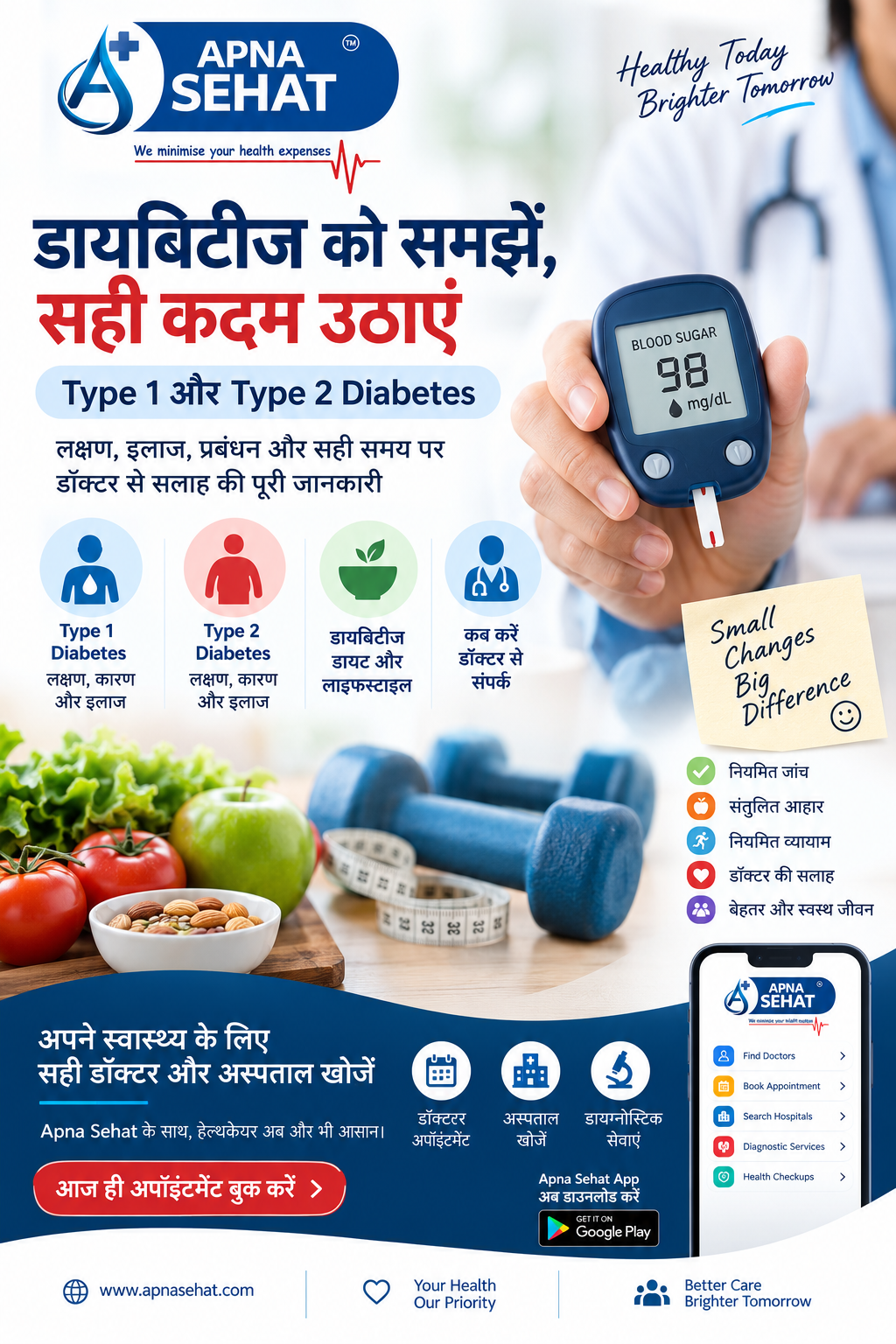
Diabetes is a long-term health condition that affects the way the body uses glucose, commonly called blood sugar. When blood glucose remains higher than normal, it can gradually affect important organs and increase the risk of complications involving the heart, kidneys, eyes, nerves and blood vessels.
Two of the most common forms are Type 1 diabetes and Type 2 diabetes. Although they share some symptoms, their causes and treatment approaches are different. Understanding these differences can help patients recognize warning signs, seek medical advice early and take better care of their health.
If you are experiencing possible diabetes symptoms or have already been diagnosed, regular medical follow-up is an important part of diabetes management. Through Apna Sehat, patients can explore healthcare services, find suitable hospitals and coordinate OPD appointments with doctors based on their requirements. Apna Sehat is a healthcare navigation platform that connects patients with hospitals, clinics and diagnostic centers rather than providing medical treatment itself.
What Is Diabetes?
Diabetes occurs when the body cannot regulate blood glucose properly. Insulin plays a major role in this process because it helps glucose move from the bloodstream into the body's cells, where it can be used for energy.
When the body does not produce enough insulin or cannot use insulin effectively, glucose can build up in the bloodstream. Persistently high blood sugar can eventually damage blood vessels and nerves and contribute to serious health problems.
Diabetes is not a condition that should be managed only when symptoms appear. Regular monitoring, appropriate treatment, healthy lifestyle habits and medical checkups can all play an important role in long-term diabetes care.
Type 1 Diabetes: What You Should Know
Type 1 diabetes is an autoimmune condition in which the body's immune system attacks the cells responsible for producing insulin. As a result, the pancreas produces little or no insulin.
Type 1 diabetes can develop at any age, although it is commonly diagnosed in children, teenagers and young adults. People with Type 1 diabetes require insulin every day for survival.
Unlike Type 2 diabetes, Type 1 diabetes is not generally caused by lifestyle choices, and currently there is no known way to prevent it.
Common Symptoms of Type 1 Diabetes
Type 1 diabetes symptoms can sometimes develop quickly. Common signs include:
- Frequent urination
- Excessive thirst
- Increased hunger
- Unexplained weight loss
- Persistent tiredness
- Blurred vision
- Mood changes or irritability
- Nausea or vomiting
- Stomach pain
Some people may initially have few symptoms, but as Type 1 diabetes progresses, symptoms can become noticeable within weeks or months.
If someone develops severe symptoms such as vomiting, abdominal pain or signs of diabetic ketoacidosis (DKA), urgent medical attention is required. DKA can be life-threatening and requires immediate medical care.
Type 1 Diabetes Treatment
There is currently no cure for Type 1 diabetes, but it can be effectively managed.
Treatment commonly involves:
- Daily insulin
- Regular blood glucose monitoring
- Appropriate nutrition
- Physical activity
- Regular medical checkups
- Diabetes education and self-management support
The exact insulin type and dosage should be determined by a healthcare professional based on the individual's condition, blood glucose levels, lifestyle and other factors.
Do not start, stop or change insulin doses without medical advice.
Type 2 Diabetes: What You Should Know
Type 2 diabetes is the most common form of diabetes. It occurs when the body does not use insulin effectively and, over time, may not produce enough insulin to maintain healthy blood glucose levels.
Type 2 diabetes is associated with several factors, including genetics, age, excess body weight and physical inactivity. However, diabetes can occur in people with different body types and lifestyles, so it is important not to make assumptions based on appearance alone.
Unlike Type 1 diabetes, Type 2 diabetes often develops gradually. Some people may have diabetes for a considerable period without noticing obvious symptoms.
Common Symptoms of Type 2 Diabetes
Possible symptoms include:
- Frequent urination
- Increased thirst
- Increased hunger
- Unexplained weight changes
- Tiredness
- Blurred vision
- Slow-healing cuts or wounds
- Tingling or numbness in the hands or feet
- Recurrent urinary or yeast infections
- Darkened patches of skin in certain areas
Some people with Type 2 diabetes have few or no noticeable symptoms. This is one reason regular health checkups and blood glucose testing are important, particularly for people who have risk factors.
Type 1 vs Type 2 Diabetes: What Is the Difference?
Although both conditions involve high blood glucose, Type 1 and Type 2 diabetes are different diseases.
| Feature | Type 1 Diabetes | Type 2 Diabetes |
|---|---|---|
| Main problem | Body produces little or no insulin | Body does not use insulin effectively and may eventually produce less |
| Immune system | Autoimmune process | Not primarily autoimmune |
| Onset | Often faster | Usually develops gradually |
| Age | Can occur at any age | More common in adults but can occur in younger people |
| Insulin | Required for survival | May or may not be required depending on the individual |
| Prevention | Currently cannot be prevented | Many cases can be prevented or delayed through risk-factor management |
| Management | Insulin, monitoring, lifestyle and medical care | Lifestyle changes, monitoring, medicines and sometimes insulin |
The treatment plan should always be personalized by a healthcare professional.
How Is Diabetes Diagnosed?
Diabetes cannot be reliably diagnosed based only on symptoms. Healthcare professionals may use blood glucose testing and other laboratory tests to determine whether a person has diabetes.
Common tests can include:
- Fasting blood glucose
- Random blood glucose
- HbA1c
- Oral glucose tolerance testing in appropriate situations
HbA1c provides an indication of average blood glucose over approximately the previous two to three months. The appropriate test depends on the individual's clinical situation.
If you are concerned about diabetes symptoms, speak with a healthcare professional instead of relying on home remedies or online information for diagnosis.
Diabetes Management: Everyday Habits That Matter
Living with diabetes involves more than checking blood sugar occasionally. Long-term management generally includes a combination of medical treatment and healthy daily habits.
1. Follow Your Treatment Plan
Take prescribed medicines or insulin exactly as directed by your healthcare professional.
Do not discontinue diabetes medication because your blood sugar temporarily improves. Your treatment plan should only be changed after discussing it with your doctor.
2. Monitor Blood Sugar When Recommended
Your healthcare professional can advise you about how frequently you should check your blood glucose and what target range is appropriate for you.
Blood glucose targets can vary depending on factors such as age, type of diabetes, medications, pregnancy, other health conditions and individual treatment goals.
3. Eat a Balanced Diet
A diabetes-friendly eating pattern does not necessarily mean completely eliminating carbohydrates.
Instead, focus on balanced meals containing appropriate portions of vegetables, whole grains or other high-fibre carbohydrate sources, protein and healthy fats, according to your individual nutritional needs.
A registered dietitian or qualified healthcare professional can help create a suitable meal plan.
4. Stay Physically Active
Regular physical activity can support blood glucose management and overall health.
The type and amount of exercise should be appropriate for your health condition. People with diabetes—particularly those using insulin or medicines that can cause low blood sugar—should ask their healthcare professional how to exercise safely.
The World Health Organization recommends at least 150 minutes of moderate physical activity per week for many adults as part of preventing or managing Type 2 diabetes, while individual recommendations may differ.
5. Attend Regular Checkups
Diabetes can affect several parts of the body over time. Regular healthcare appointments can help monitor blood glucose and identify potential complications early.
Depending on your condition, your healthcare team may include a primary care doctor, endocrinologist, dietitian, eye specialist, dentist, pharmacist or other healthcare professionals.
When Should You See a Diabetes Doctor?
Consider scheduling a medical consultation if you:
- Have symptoms associated with diabetes
- Have repeatedly elevated blood sugar readings
- Have been told that your blood glucose or HbA1c is abnormal
- Have a family history or other risk factors for Type 2 diabetes
- Are struggling to control your blood sugar
- Experience frequent high or low blood sugar
- Need help understanding your diabetes medication
- Need advice about nutrition or physical activity
- Have diabetes-related concerns involving your eyes, feet, kidneys, nerves or heart
A doctor can assess your symptoms, recommend appropriate testing and develop a treatment plan based on your individual health needs.
Diabetes and Emergency Symptoms
Some diabetes-related situations require urgent medical attention.
Seek emergency medical care if you or someone with diabetes develops severe symptoms such as:
- Loss of consciousness
- Severe confusion
- Difficulty breathing
- Persistent vomiting
- Severe weakness
- Symptoms suggesting diabetic ketoacidosis
- A severe episode of low blood sugar that does not improve with appropriate immediate treatment
Do not delay emergency care while trying home remedies or waiting for an online consultation.
How Apna Sehat Can Help You Find Healthcare
Managing diabetes often requires ongoing contact with healthcare professionals. Finding the right doctor or hospital, however, can sometimes be time-consuming.
Apna Sehat is designed to simplify healthcare access by connecting patients with verified hospitals, clinics and diagnostic centers.
Through the Apna Sehat platform, patients can explore services such as:
- OPD doctor appointments
- Hospital admission coordination
- Diagnostic and laboratory services
- Full-body health checkups
- Hospital discovery based on location and requirements
- Healthcare service coordination
Apna Sehat describes itself as a healthcare service provider and navigation platform rather than a hospital or clinic.
For people looking for a diabetes doctor, diabetes specialist, blood sugar checkup or suitable hospital, the platform can help simplify the process of finding and booking healthcare services.
Book a Doctor Appointment With Apna Sehat
If you are experiencing diabetes symptoms or need ongoing diabetes care, don't ignore your health concerns.
Visit Apna Sehat to explore healthcare services and appointment options:
Website: Apna Sehat – Healthcare Services
You can also use the Apna Sehat mobile app to explore doctors, hospitals, diagnostic services and healthcare options from your phone:
Android App: Download Apna Sehat on Google Play
Frequently Asked Questions About Diabetes
Is Type 1 diabetes the same as Type 2 diabetes?
No. Type 1 diabetes occurs when the immune system destroys insulin-producing cells, resulting in little or no insulin production. Type 2 diabetes involves insulin resistance and, over time, inadequate insulin production. Their treatment approaches are therefore different.
Can Type 1 diabetes be prevented?
Currently, there is no known way to prevent Type 1 diabetes. However, it can be treated and managed with appropriate medical care and insulin therapy.
Can Type 2 diabetes be prevented?
Many cases of Type 2 diabetes can be prevented or delayed by addressing risk factors such as physical inactivity and excess body weight. Healthy eating, regular physical activity and maintaining a healthy weight can help reduce risk.
Can diabetes be cured?
There is currently no general cure for diabetes. However, diabetes can be managed effectively. Some people with Type 2 diabetes can achieve blood glucose levels in the non-diabetes range, sometimes without medication, but this should be discussed and monitored with a healthcare professional.
What doctor should I see for diabetes?
Depending on your condition, you may start with a primary care physician or consult an endocrinologist or other diabetes-care professional. The appropriate specialist depends on your symptoms, diagnosis and treatment needs.
Should I stop my diabetes medicine if my blood sugar becomes normal?
No. Never stop or change prescribed diabetes medication or insulin without speaking with your healthcare professional. A normal reading may be the result of your current treatment working effectively.
Final Thoughts
Whether you are concerned about Type 1 diabetes symptoms, Type 2 diabetes symptoms, high blood sugar or an existing diabetes diagnosis, early medical guidance and consistent follow-up can make diabetes management easier.
Diabetes care is highly individual. The right treatment depends on the type of diabetes, blood glucose levels, medications, age, lifestyle and other health conditions.
Instead of ignoring symptoms or relying solely on online advice, speak with a qualified healthcare professional.
Apna Sehat helps simplify the journey by connecting patients with hospitals, doctors and diagnostic services. When you need a doctor appointment, hospital or diagnostic service, you can explore your options through the Apna Sehat website or mobile application.
Medical Disclaimer
This article is intended for general health education only. It does not diagnose, treat or prevent diabetes and should not replace advice from a qualified doctor or other healthcare professional. Diabetes treatment and medication requirements differ from person to person. If you have symptoms, abnormal blood glucose results or an existing diabetes diagnosis, consult an appropriate healthcare professional. In an emergency, seek immediate medical care.
डायबिटीज यानी मधुमेह आज एक आम लेकिन गंभीर स्वास्थ्य समस्या बन चुकी है। यह एक ऐसी दीर्घकालिक बीमारी है जिसमें शरीर रक्त में मौजूद ग्लूकोज यानी ब्लड शुगर को सामान्य स्तर पर नियंत्रित नहीं कर पाता। लंबे समय तक ब्लड शुगर बढ़ा रहने पर हृदय, किडनी, आंखों, नसों और रक्त वाहिकाओं पर इसका असर पड़ सकता है।
डायबिटीज मुख्य रूप से कई प्रकार की होती है, लेकिन टाइप 1 डायबिटीज और टाइप 2 डायबिटीज सबसे अधिक चर्चा में आने वाले प्रकार हैं। दोनों में ब्लड शुगर बढ़ सकता है, लेकिन इनके कारण और उपचार अलग-अलग होते हैं।
अगर आपको डायबिटीज के लक्षण दिखाई दे रहे हैं या पहले से डायबिटीज है, तो समय पर डॉक्टर से सलाह लेना और नियमित स्वास्थ्य जांच कराना बहुत जरूरी है।
Apna Sehat मरीजों को उनकी जरूरत के अनुसार डॉक्टर, अस्पताल और डायग्नोस्टिक सेवाएं खोजने और अपॉइंटमेंट लेने में मदद करने वाला हेल्थकेयर प्लेटफॉर्म है।
डायबिटीज क्या है?
डायबिटीज एक ऐसी स्थिति है जिसमें शरीर रक्त में मौजूद ग्लूकोज को ठीक से नियंत्रित नहीं कर पाता।
हमारे शरीर में इंसुलिन नामक हार्मोन ग्लूकोज को रक्त से शरीर की कोशिकाओं तक पहुंचाने में महत्वपूर्ण भूमिका निभाता है। जब शरीर पर्याप्त इंसुलिन नहीं बनाता या इंसुलिन का सही तरीके से उपयोग नहीं कर पाता, तो रक्त में ग्लूकोज की मात्रा बढ़ने लगती है।
यदि ब्लड शुगर लंबे समय तक अधिक रहता है, तो इससे शरीर के विभिन्न अंग प्रभावित हो सकते हैं। इसलिए डायबिटीज मैनेजमेंट में नियमित जांच, सही दवा, संतुलित भोजन, शारीरिक गतिविधि और डॉक्टर की सलाह महत्वपूर्ण होती है।
टाइप 1 डायबिटीज क्या है?
टाइप 1 डायबिटीज एक ऑटोइम्यून बीमारी है। इसमें शरीर की प्रतिरक्षा प्रणाली गलती से अग्न्याशय यानी पैंक्रियास की उन कोशिकाओं को नुकसान पहुंचाती है जो इंसुलिन बनाती हैं।
इसके कारण शरीर बहुत कम या बिल्कुल भी इंसुलिन नहीं बना पाता।
टाइप 1 डायबिटीज बच्चों और युवाओं में अधिक देखी जाती है, लेकिन यह किसी भी उम्र में हो सकती है। इस स्थिति में शरीर को जीवित रहने के लिए नियमित रूप से इंसुलिन की आवश्यकता होती है।
टाइप 1 डायबिटीज आमतौर पर जीवनशैली या खान-पान की गलती के कारण नहीं होती।
टाइप 1 डायबिटीज के सामान्य लक्षण
टाइप 1 डायबिटीज के लक्षण कई बार अचानक दिखाई दे सकते हैं। इनमें शामिल हैं:
- बार-बार पेशाब आना
- बहुत अधिक प्यास लगना
- बार-बार भूख लगना
- बिना कारण वजन कम होना
- लगातार थकान महसूस होना
- आंखों से धुंधला दिखाई देना
- चिड़चिड़ापन या मूड में बदलाव
- मतली या उल्टी
- पेट में दर्द
कुछ मामलों में लक्षण तेजी से बढ़ सकते हैं। यदि किसी व्यक्ति को लगातार उल्टी, पेट में तेज दर्द, सांस लेने में परेशानी, अत्यधिक कमजोरी या भ्रम जैसी समस्या हो रही है, तो तुरंत चिकित्सा सहायता लेना आवश्यक है।
टाइप 1 डायबिटीज का इलाज
फिलहाल टाइप 1 डायबिटीज का कोई सामान्य स्थायी इलाज उपलब्ध नहीं है, लेकिन उचित उपचार और नियमित देखभाल से इसे नियंत्रित किया जा सकता है।
टाइप 1 डायबिटीज के उपचार में आमतौर पर शामिल हो सकते हैं:
- इंसुलिन थेरेपी
- नियमित ब्लड शुगर जांच
- संतुलित आहार
- नियमित शारीरिक गतिविधि
- डॉक्टर से नियमित जांच
- डायबिटीज संबंधी सही जानकारी और शिक्षा
इंसुलिन की मात्रा और प्रकार हर मरीज के लिए अलग हो सकते हैं। इसलिए इंसुलिन की मात्रा खुद से बदलना या बंद करना नहीं चाहिए।
टाइप 2 डायबिटीज क्या है?
टाइप 2 डायबिटीज डायबिटीज का सबसे सामान्य प्रकार है।
इसमें शरीर इंसुलिन का सही तरीके से इस्तेमाल नहीं कर पाता, जिसे इंसुलिन रेजिस्टेंस कहा जाता है। समय के साथ शरीर की इंसुलिन बनाने की क्षमता भी कम हो सकती है, जिससे ब्लड शुगर बढ़ने लगता है।
टाइप 2 डायबिटीज का खतरा उम्र, पारिवारिक इतिहास, अधिक वजन, शारीरिक गतिविधि की कमी और अन्य स्वास्थ्य संबंधी कारणों से बढ़ सकता है।
हालांकि, यह समझना जरूरी है कि टाइप 2 डायबिटीज केवल अधिक वजन वाले लोगों को ही नहीं होती। अलग-अलग उम्र और शरीर की बनावट वाले लोगों में भी यह बीमारी हो सकती है।
टाइप 2 डायबिटीज के लक्षण
टाइप 2 डायबिटीज धीरे-धीरे विकसित हो सकती है। कई लोगों को लंबे समय तक कोई स्पष्ट लक्षण भी महसूस नहीं होते।
संभावित टाइप 2 डायबिटीज के लक्षण हैं:
- बार-बार पेशाब आना
- बहुत अधिक प्यास लगना
- अधिक भूख लगना
- लगातार थकान
- बिना स्पष्ट कारण वजन में बदलाव
- धुंधला दिखाई देना
- घाव का धीरे-धीरे भरना
- हाथ-पैर में झुनझुनी या सुन्नपन
- बार-बार संक्रमण होना
- त्वचा के कुछ हिस्सों में त्वचा का रंग गहरा होना
यदि आपको इनमें से कई लक्षण दिखाई दे रहे हैं, तो केवल घरेलू उपचार पर निर्भर रहने के बजाय डॉक्टर से सलाह लेना बेहतर है।
टाइप 1 और टाइप 2 डायबिटीज में क्या अंतर है?
टाइप 1 और टाइप 2 डायबिटीज दोनों में ब्लड शुगर बढ़ सकता है, लेकिन दोनों की प्रकृति अलग होती है।
| अंतर | टाइप 1 डायबिटीज | टाइप 2 डायबिटीज |
|---|---|---|
| मुख्य समस्या | शरीर बहुत कम या बिल्कुल इंसुलिन नहीं बनाता | शरीर इंसुलिन का प्रभावी उपयोग नहीं कर पाता |
| प्रमुख कारण | ऑटोइम्यून प्रक्रिया | इंसुलिन रेजिस्टेंस और अन्य जोखिम कारक |
| शुरुआत | कई बार तेजी से | आमतौर पर धीरे-धीरे |
| उम्र | किसी भी उम्र में हो सकती है | अधिकतर वयस्कों में, लेकिन कम उम्र में भी हो सकती है |
| इंसुलिन | आमतौर पर जीवनभर आवश्यक | कुछ लोगों को आवश्यकता हो सकती है |
| रोकथाम | वर्तमान में ज्ञात रोकथाम नहीं | कई मामलों में जोखिम कम या शुरुआत को टाला जा सकता है |
| प्रबंधन | इंसुलिन, जांच और जीवनशैली | जीवनशैली, दवाएं, जांच और जरूरत पड़ने पर इंसुलिन |
हर मरीज का उपचार उसकी व्यक्तिगत स्वास्थ्य स्थिति के अनुसार निर्धारित किया जाना चाहिए।
डायबिटीज की जांच कैसे होती है?
सिर्फ लक्षण देखकर डायबिटीज की पुष्टि नहीं की जा सकती। इसके लिए डॉक्टर आवश्यकतानुसार ब्लड शुगर और अन्य जांच की सलाह दे सकते हैं।
आम तौर पर उपयोग की जाने वाली जांचों में शामिल हैं:
1. फास्टिंग ब्लड शुगर
इस जांच में खाली पेट रक्त में ग्लूकोज का स्तर देखा जाता है।
2. रैंडम ब्लड शुगर
दिन में किसी भी समय ब्लड ग्लूकोज की जांच की जा सकती है।
3. HbA1c टेस्ट
HbA1c टेस्ट पिछले लगभग दो से तीन महीनों के औसत ब्लड शुगर का अनुमान देने में मदद करता है।
4. ओरल ग्लूकोज टॉलरेंस टेस्ट
कुछ परिस्थितियों में डॉक्टर इस जांच की सलाह दे सकते हैं।
कौन-सी जांच आवश्यक है, यह व्यक्ति की उम्र, लक्षण और स्वास्थ्य स्थिति पर निर्भर करता है।
डायबिटीज को कैसे नियंत्रित करें?
डायबिटीज मैनेजमेंट केवल दवा लेने तक सीमित नहीं है। रोजमर्रा की आदतें भी महत्वपूर्ण भूमिका निभाती हैं।
1. डॉक्टर द्वारा बताई गई दवा लें
डॉक्टर ने जिस दवा या इंसुलिन की सलाह दी है, उसे निर्धारित तरीके से लें।
ब्लड शुगर सामान्य आने पर अपनी दवा खुद से बंद न करें।
2. नियमित ब्लड शुगर जांच करें
आपको कितनी बार ब्लड शुगर जांचना चाहिए, यह आपकी स्थिति और उपचार पर निर्भर करता है। अपने डॉक्टर से अपने लिए सही जांच शेड्यूल के बारे में पूछें।
3. संतुलित आहार लें
डायबिटीज होने का मतलब यह नहीं है कि हर तरह के कार्बोहाइड्रेट को पूरी तरह बंद कर दिया जाए।
अपने भोजन में उचित मात्रा में सब्जियां, प्रोटीन, फाइबर युक्त खाद्य पदार्थ और अन्य पौष्टिक चीजों को शामिल करें।
आपके लिए सही डायबिटीज डाइट आपकी स्वास्थ्य स्थिति और उपचार के अनुसार डॉक्टर या योग्य डायटीशियन द्वारा निर्धारित की जानी चाहिए।
4. शारीरिक रूप से सक्रिय रहें
नियमित शारीरिक गतिविधि ब्लड शुगर नियंत्रण और सामान्य स्वास्थ्य के लिए फायदेमंद हो सकती है।
हालांकि, यदि आप इंसुलिन या ऐसी दवाएं लेते हैं जिनसे ब्लड शुगर बहुत कम हो सकता है, तो व्यायाम की सही मात्रा और सावधानियों के बारे में डॉक्टर से सलाह लें।
5. नियमित हेल्थ चेकअप कराएं
डायबिटीज शरीर के कई अंगों को प्रभावित कर सकती है। इसलिए नियमित डायबिटीज चेकअप महत्वपूर्ण है।
डॉक्टर आवश्यकता के अनुसार आंखों, किडनी, पैरों, नसों और हृदय से संबंधित स्वास्थ्य की भी जांच कर सकते हैं।
डायबिटीज के लिए डॉक्टर से कब मिलना चाहिए?
यदि आपको निम्न में से कोई समस्या है, तो डॉक्टर से परामर्श लेने पर विचार करें:
- डायबिटीज के संभावित लक्षण दिखाई देना
- बार-बार ब्लड शुगर बढ़ना
- HbA1c या ब्लड शुगर रिपोर्ट असामान्य आना
- परिवार में डायबिटीज का इतिहास होना
- ब्लड शुगर नियंत्रित करने में परेशानी होना
- बार-बार लो या हाई ब्लड शुगर होना
- डायबिटीज की दवा को लेकर सवाल होना
- डाइट या एक्सरसाइज को लेकर सलाह की आवश्यकता होना
- आंखों, पैरों, किडनी या नसों से संबंधित समस्या होना
आपकी स्थिति के आधार पर डॉक्टर आगे की जांच और उपचार की सलाह दे सकते हैं।
डायबिटीज में कौन-से लक्षण इमरजेंसी हो सकते हैं?
कुछ परिस्थितियों में डायबिटीज से जुड़ी समस्या गंभीर हो सकती है और तत्काल चिकित्सा सहायता की आवश्यकता हो सकती है।
यदि किसी डायबिटीज मरीज को:
- बेहोशी
- अत्यधिक भ्रम या असामान्य व्यवहार
- सांस लेने में कठिनाई
- लगातार उल्टी
- बहुत अधिक कमजोरी
- गंभीर लो ब्लड शुगर
- डायबिटिक कीटोएसिडोसिस (DKA) के संभावित लक्षण
जैसी समस्या हो, तो तुरंत नजदीकी अस्पताल या इमरजेंसी चिकित्सा सेवा से संपर्क करें।
ऐसी स्थिति में घरेलू उपचार या ऑनलाइन जानकारी के आधार पर इलाज में देरी न करें।
Apna Sehat से डॉक्टर और अस्पताल ढूंढना हुआ आसान
डायबिटीज जैसी लंबे समय तक चलने वाली बीमारी में नियमित डॉक्टर की सलाह और फॉलो-अप जरूरी हो सकता है। लेकिन सही डॉक्टर या अस्पताल ढूंढना कई बार मुश्किल और समय लेने वाला हो सकता है।
Apna Sehat का उद्देश्य मरीजों को उनकी स्वास्थ्य आवश्यकताओं के अनुसार डॉक्टर, अस्पताल और डायग्नोस्टिक सेवाएं खोजने में मदद करना है।
Apna Sehat के माध्यम से मरीज अपनी जरूरत के अनुसार:
- डॉक्टर की OPD अपॉइंटमेंट
- अस्पताल की जानकारी
- डायग्नोस्टिक और लैब सेवाएं
- हेल्थ चेकअप
- अपनी आवश्यकता के अनुसार अस्पताल की खोज
- विभिन्न हेल्थकेयर सेवाओं की जानकारी
प्राप्त कर सकते हैं।
अगर आप डायबिटीज डॉक्टर, डायबिटीज स्पेशलिस्ट, ब्लड शुगर टेस्ट, डायबिटीज चेकअप या उपयुक्त अस्पताल की तलाश कर रहे हैं, तो Apna Sehat आपको healthcare options खोजने की प्रक्रिया को आसान बनाने में मदद कर सकता है।
Apna Sehat पर डॉक्टर की अपॉइंटमेंट कैसे लें?
यदि आपको डायबिटीज के लक्षण दिखाई दे रहे हैं या आप पहले से डायबिटीज के मरीज हैं और नियमित जांच की आवश्यकता है, तो डॉक्टर से सलाह लेना महत्वपूर्ण है।
Apna Sehat की वेबसाइट पर जाकर आप उपलब्ध healthcare services और appointment options के बारे में जानकारी प्राप्त कर सकते हैं।
Apna Sehat Website:
https://apnasehat.com/
आप Android मोबाइल पर Apna Sehat App के माध्यम से भी healthcare services और appointment options देख सकते हैं।
Apna Sehat Android App:
https://play.google.com/store/apps/details?id=com.medical.apnasehat&pcampaignid=web_share
डायबिटीज से जुड़े अक्सर पूछे जाने वाले सवाल
क्या टाइप 1 और टाइप 2 डायबिटीज एक ही होती है?
नहीं। टाइप 1 डायबिटीज मुख्य रूप से ऑटोइम्यून प्रक्रिया से जुड़ी होती है, जिसमें शरीर इंसुलिन बनाने वाली कोशिकाओं को नुकसान पहुंचाता है। टाइप 2 डायबिटीज में शरीर इंसुलिन का सही तरीके से उपयोग नहीं कर पाता और समय के साथ इंसुलिन उत्पादन भी कम हो सकता है।
क्या टाइप 1 डायबिटीज को रोका जा सकता है?
वर्तमान में टाइप 1 डायबिटीज को रोकने का कोई निश्चित तरीका ज्ञात नहीं है। हालांकि, उचित इंसुलिन उपचार और नियमित चिकित्सा देखभाल से इसे मैनेज किया जा सकता है।
क्या टाइप 2 डायबिटीज से बचा जा सकता है?
कई मामलों में टाइप 2 डायबिटीज के जोखिम को कम किया जा सकता है। नियमित शारीरिक गतिविधि, संतुलित भोजन और स्वस्थ वजन बनाए रखना इसमें मदद कर सकता है।
क्या डायबिटीज पूरी तरह ठीक हो सकती है?
डायबिटीज का कोई सामान्य स्थायी इलाज नहीं है। हालांकि, सही उपचार और जीवनशैली के साथ इसे प्रभावी रूप से नियंत्रित किया जा सकता है। कुछ लोगों में टाइप 2 डायबिटीज के दौरान ब्लड शुगर सामान्य स्तर पर आ सकता है, लेकिन ऐसी स्थिति में भी डॉक्टर की निगरानी जरूरी होती है।
डायबिटीज के लिए किस डॉक्टर से मिलना चाहिए?
आप शुरुआत में सामान्य चिकित्सक यानी General Physician से सलाह ले सकते हैं। आवश्यकता के अनुसार डॉक्टर आपको Endocrinologist या Diabetes Specialist के पास रेफर कर सकते हैं।
क्या ब्लड शुगर सामान्य आने पर डायबिटीज की दवा बंद कर देनी चाहिए?
नहीं। डॉक्टर की सलाह के बिना डायबिटीज की दवा या इंसुलिन बंद नहीं करना चाहिए। ब्लड शुगर सामान्य होना कई बार आपके मौजूदा उपचार के प्रभावी होने का संकेत हो सकता है।
निष्कर्ष
टाइप 1 और टाइप 2 डायबिटीज दोनों ही ऐसी स्वास्थ्य स्थितियां हैं जिनमें नियमित देखभाल और उचित चिकित्सा सलाह महत्वपूर्ण है।
अगर आपको डायबिटीज के लक्षण, बार-बार हाई ब्लड शुगर, असामान्य HbA1c रिपोर्ट या डायबिटीज से जुड़ी कोई अन्य समस्या है, तो डॉक्टर से सलाह लेने में देरी न करें।
डायबिटीज का उपचार हर व्यक्ति के लिए अलग हो सकता है। आपकी उम्र, डायबिटीज का प्रकार, ब्लड शुगर का स्तर, दवाएं, जीवनशैली और अन्य स्वास्थ्य समस्याओं के आधार पर डॉक्टर आपके लिए उचित उपचार योजना तैयार कर सकते हैं।
Apna Sehat का उद्देश्य मरीजों को डॉक्टर, अस्पताल और डायग्नोस्टिक सेवाएं खोजने और अपॉइंटमेंट प्रक्रिया को आसान बनाने में मदद करना है।
अपने स्वास्थ्य को नजरअंदाज न करें। सही समय पर सही डॉक्टर से सलाह लेना बेहतर स्वास्थ्य की दिशा में एक महत्वपूर्ण कदम हो सकता है।
आज ही Apna Sehat पर अपनी जरूरत के अनुसार डॉक्टर या अस्पताल खोजें।
चिकित्सा संबंधी अस्वीकरण
यह लेख केवल सामान्य स्वास्थ्य जानकारी और जागरूकता के उद्देश्य से है। यह किसी व्यक्ति की बीमारी का निदान, उपचार या रोकथाम करने के लिए चिकित्सा सलाह का विकल्प नहीं है। डायबिटीज का उपचार हर व्यक्ति की स्वास्थ्य स्थिति के अनुसार अलग हो सकता है। किसी भी दवा या इंसुलिन की मात्रा को खुद से शुरू, बंद या बदलने से पहले योग्य डॉक्टर से सलाह लें। गंभीर या आपातकालीन लक्षण होने पर तुरंत नजदीकी अस्पताल या आपातकालीन चिकित्सा सेवा से संपर्क करें।